An AC furnace capacitor is a small component with a large effect on many forced-air heating and cooling systems. In equipment that uses a single-phase blower or condenser motor, the capacitor supports starting torque and stable running. A weak capacitor can leave a motor humming, slow, or unable to start, but similar symptoms can come from the control board, relay, wiring, bearings, or motor windings. Safe diagnosis starts with the equipment label and wiring diagram.
Many furnace and air-handler blowers use a motor circuit that depends on phase-shifted current. The capacitor helps the auxiliary winding produce useful starting and running torque. When its capacitance drifts, the motor may draw current differently, start slowly, run hot, or fail to reach the airflow expected by the system.
The exact capacitor type varies by equipment. Some systems use a dedicated motor-run capacitor, while others use a dual-value capacitor or an electronically commutated motor with different controls. The term AC furnace capacitor describes an application context, not one universal part number. Always read the furnace or air-handler data plate before selecting a replacement.
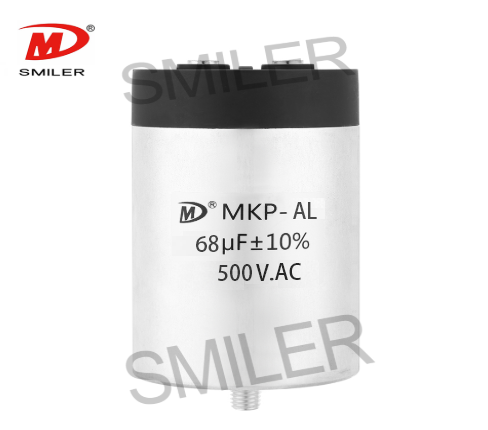
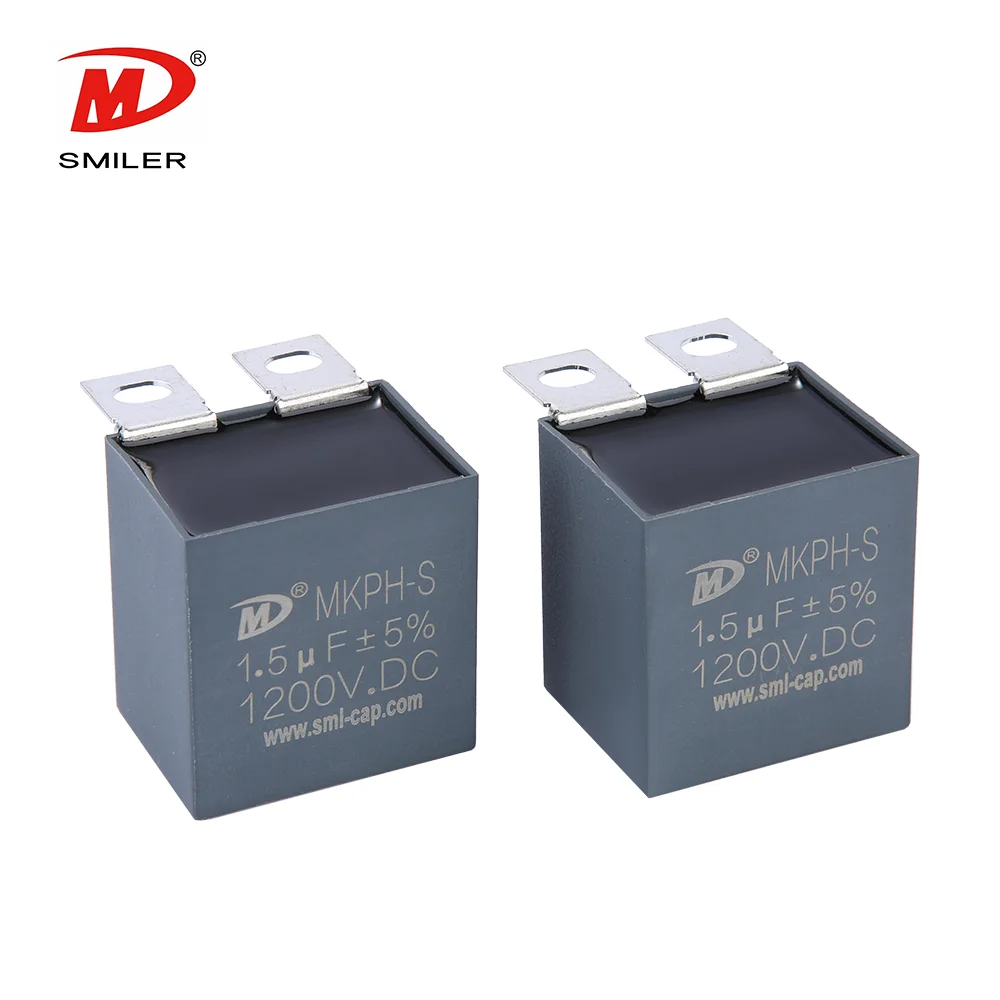
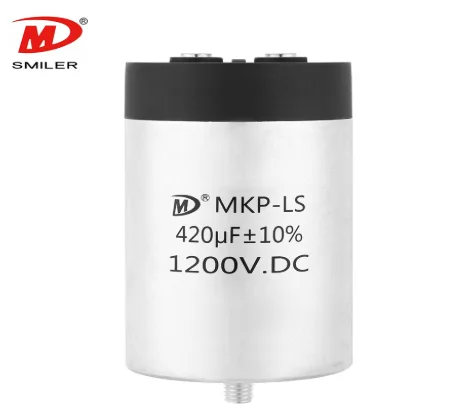
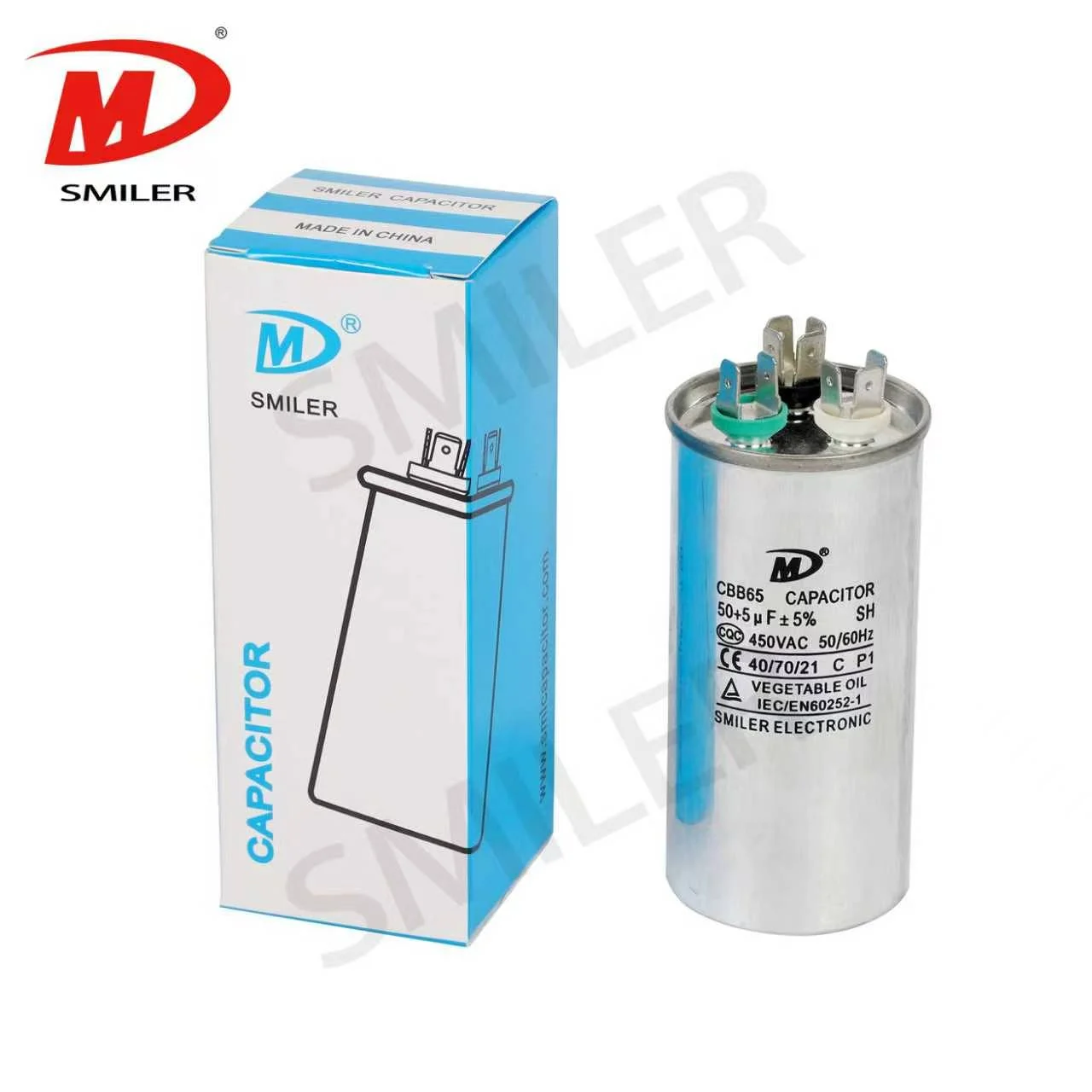
The capacitor product range provides a useful reference for package styles and application notes, while the furnace nameplate remains the controlling specification.
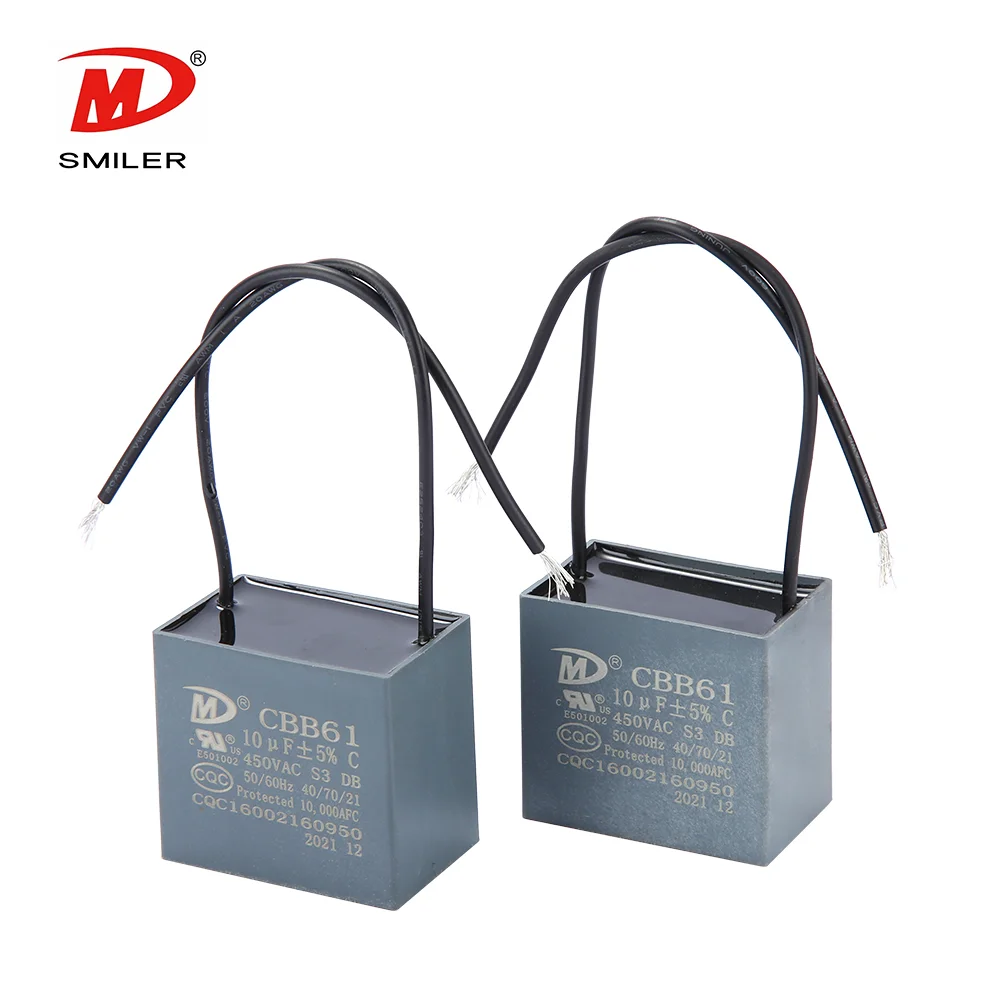
For appliance and motor applications, SMILER capacitor's approved product information identifies CBB families as film capacitors for defined single-phase AC motor duties. Those family facts can support a technical comparison, but they do not establish that a CBB part is suitable for a specific furnace blower or condenser. The equipment label and service documentation remain decisive.
The CBB61 family uses metallized polypropylene film, a flame-retardant plastic shell, and resin filling. Listed characteristics include low loss, low internal temperature rise, high reliability, self-healing property, and long lifetime. It is specified for starting and running single-phase motors powered by 50/60 Hz AC, including fans, ventilators, air purifiers, and other AC motors. These published facts do not turn a fan capacitor into a universal furnace replacement.
During cooling, restricted blower performance can reduce airflow across the coil and affect comfort, coil temperature, and system protection. During heating, low airflow can contribute to limit trips or uneven room temperatures. These outcomes do not prove capacitor failure. Dirty filters, blocked ducts, a failing blower motor, a stuck relay, or a thermostat issue may create similar symptoms.
A motor that hums without reaching speed can have insufficient starting torque. A blower that starts only after repeated calls, needs a manual spin, or stops under load needs prompt professional attention. Do not reach into an access panel or attempt to spin a motor while power is connected.
Lower speed can reduce the delivered airflow. It can make the furnace or air handler act in unexpected ways. A capacitor outside its tolerance can increase motor stress. But blocked filters, dirty wheels, bearing drag, and supply voltage problems can also raise the temperature. If the cabinet smells burned, the breaker trips, or the motor becomes unusually hot, shut the system down. Then call a qualified technician.
An aging capacitor can perform differently as it warms up. This creates intermittent starts or speed changes. Protection trips can also point to a fault in the compressor, blower, control, or wiring. Record when the symptom occurs. Note whether it affects heating, cooling, or both. This information helps the service technician narrow down the fault.
Before testing, identify whether the component belongs to the blower, condenser, or another motor. Record the capacitance, rated VAC, tolerance, frequency, terminal labels, and whether the part has one or two values. The original wiring and equipment manual take priority over a generic online chart.
Turn off the correct disconnect and breaker. This prevents re-energizing. Verify the absence of voltage with a properly rated tester. HVAC capacitors can store energy after power is removed. A technician should use an appropriate resistor-based discharge tool. The technician must verify zero voltage before disconnecting leads. Never short terminals with a screwdriver.
Inspect for bulging, oil residue, cracking, corrosion, heat discoloration, loose terminals, or damaged wire insulation. A sound exterior does not prove the capacitor is healthy. So continue with an instrument test when safe.
With the capacitor isolated as required by the service procedure, measure each capacitance section with a meter designed for the task. Compare the value with the marked tolerance. Then check connectors, relays, motor wiring, airflow restrictions, and the motor itself. A capacitor reading within tolerance does not rule out a motor bearing problem, voltage drop, or an intermittent connection.
Use the equipment manufacturer's required capacitance and a suitable AC voltage rating. Never choose a larger μF value as a performance upgrade. A different value changes motor phase relationships and can raise winding current. A lower voltage rating reduces safety margin; a higher rating may still be unsuitable if the capacitance, duty, temperature, size, or terminals do not match.
Furnace and air-handler compartments can experience heat, vibration, dust, and repeated starts. The replacement must be designed for the motor's continuous AC duty and physical environment. Secure the component, preserve terminal spacing, and route wires away from hot surfaces and moving parts.
SMILER capacitor develops film capacitor families for AC motor and power applications. The CBB65 capacitor family is listed for fans and other appliances; this does not establish furnace suitability. Our support team can review the equipment label, original capacitor marking, and circuit context before a buyer evaluates a candidate part.
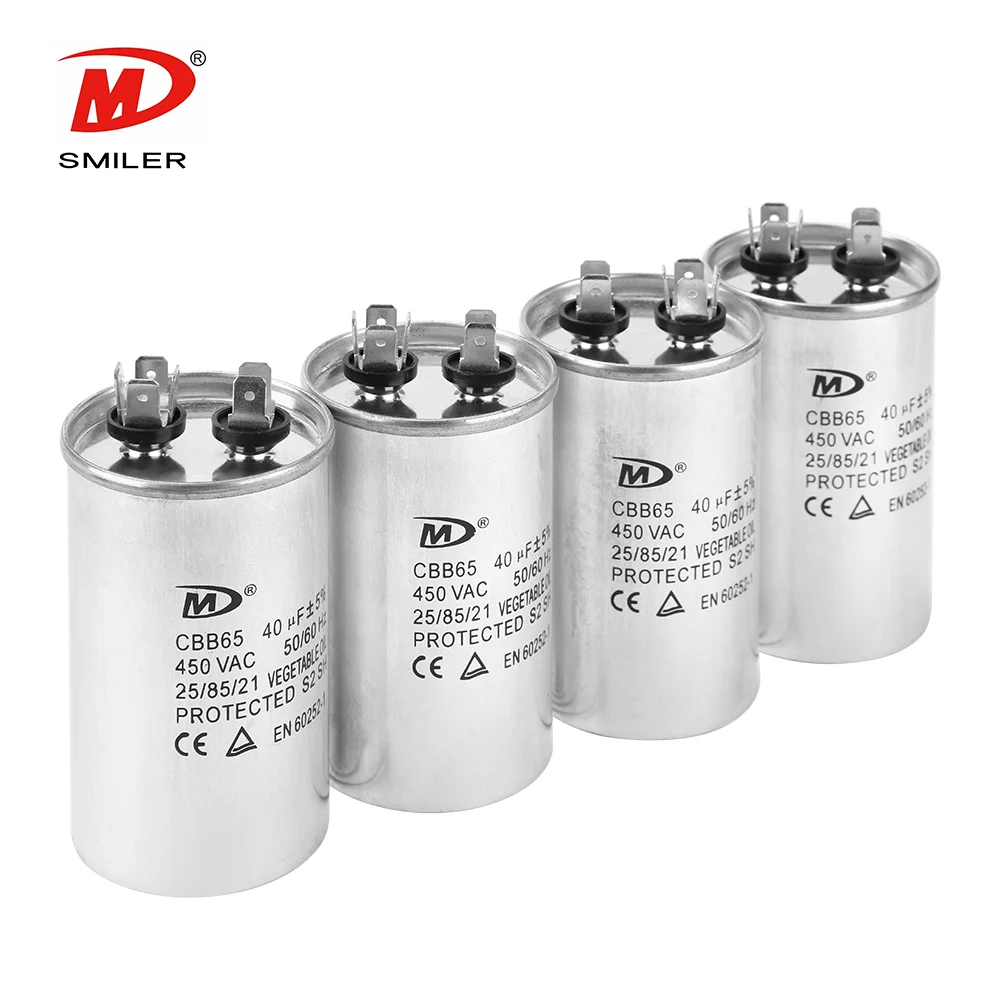
See the CBB61 product page for another single-phase motor capacitor family.
After installation, the technician needs to check the connections. They must be secure. The rotation must be correct. Airflow, current, and temperature also need proper attention during the equipment's normal operating modes. The system should start smoothly. It should deliver stable airflow. There must be no unusual noise or heat. If a replacement capacitor does not resolve the symptom, continued operation can damage the motor. It can create an unsafe condition, too.
A: It supports the phase relationship that helps a single-phase blower or condenser motor start and run. The exact role depends on the equipment's motor and control circuit.
A: Humming, delayed starting, weak airflow, speed changes, overheating, and protection trips can occur. The same symptoms may come from other HVAC components.
A: Do not do so as an upgrade. Use the specified capacitance and verify voltage, duty, temperature, terminals, and physical fit. A larger value can increase motor stress.
A: No. The disconnect and breaker must be isolated, stored energy must be discharged using an appropriate method, and zero voltage must be verified before handling terminals.
A: The original fault may be a relay, control board, wiring connection, motor, bearing, airflow restriction, or supply-voltage issue. A complete HVAC diagnosis is needed.
 Add
Building 12,Huazhi Technology Innovation Center,28 Sanle East Road,Beijiao,Foshan,Guangdong,China
 Phone
+86 18007576965 / 0757-22391591
 Email
ari@sml-cap.cn