

Getting the best energy use in today's power electronics depends a lot on the build and specs of the simple parts used. Semiconductors manage the energy flow. But AC filter capacitors do the main job of cleaning that power and making sure it reaches where needed without waste. In tough factory settings, the gap between a basic capacitor and a focused power film capacitor shows up in real changes to running costs and gear life span.
Power Factor Correction (PFC) works as a basic way to match voltage and current waves for the most useful power. Factory setups often use loads like induction motors and transformers. These cause the current wave to fall behind the voltage. That leads to a low power factor. Adding AC capacitors next to the load brings in a current that pulls ahead. This fixes the delay. As a result, power from the grid goes to real tasks. It does not get lost as unused current. This cuts bill extras and eases the load on the power setup.
Reactive power moves to and fro between the source and load. It does no helpful work. Yet it still creates heat in lines and wires through $I^2R$ losses. AC filter capacitors give this needed reactive power right at the spot. They stop it from going through the main lines. By cutting how far reactive power travels, these parts lower the current size in supply paths. So, the whole system runs cooler and smoother. This means thinner wires and lower cooling costs in big power systems.
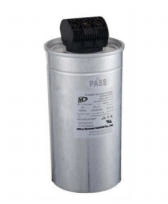
Total Harmonic Distortion (THD) poses a big risk to the smooth run of new inverters and variable frequency drives (VFDs). Loads like switching supplies and rectifiers push odd high-speed currents back into the system. This twists the sine wave. Without checks, these extras cause heat in neutral wires, shakes in motors, and early breakdowns in key electronic parts.
AC filter capacitors offer an easy path for high-speed harmonic currents. They push them away from the load. In a common DC-to-AC inverter use, switches make a "step" wave. This needs smoothing to a clear sine before linking to the grid. Strong AC capacitors take in quick voltage jumps and ripple currents. The outcome is a steady, clean output voltage. It meets tight power quality rules. Downstream gear then works in its best range without stops.
Polypropylene film tech stands as the go-to choice for power electronics. It comes from its built-in electrical steadiness and small loss traits. Unlike past methods, new metallized film capacitors handle steady high-voltage AC tasks without much wear.
Low Equivalent Series Resistance (ESR) counts as the top factor when picking a capacitor for energy savings. High ESR leads to heat inside the part. This wastes energy and risks breakdown. AC film capacitors are built with very low ESR. So they lose little power even with big ripple currents. This lets the full circuit keep high save levels. Less energy turns into heat in the simple parts.
Metallized film capacitors offer distinct advantages over aluminum electrolytic counterparts, particularly regarding lifespan and reliability in AC applications. While electrolytic capacitors may offer higher capacitance per volume, they are prone to drying out and have lower ripple current capabilities. In contrast, AC film capacitors possess self-healing properties; if a microscopic dielectric breakdown occurs, the metallization vaporizes around the fault, isolating it and allowing the capacitor to continue functioning. This reliability is paramount for remote installations, such as offshore wind turbines, where maintenance access is difficult and costly.
Thermal stability ensures that a capacitor's capacitance and dissipation factor remain constant despite temperature fluctuations common in power cabinets. In high-frequency switching environments like EV chargers or solar inverters, components are subjected to rapid thermal cycling. High-quality film capacitors maintain their performance metrics across a wide temperature range, ensuring that the resonant frequency of the filter does not drift, which would otherwise compromise the system's efficiency and protection capabilities.
Renewable energy setups and electric vehicle systems depend on careful power change handling. In these cases, the AC filter capacitor is more than a part. It makes the whole system work well.
Solar power storage needs inverters to turn DC into grid-ready AC with little loss. In a fresh 10MW solar site build, adding special AC Filter capacitors helped central inverters hit over 98.5% turn rate. These parts cleaned the pulse-width modulation (PWM) output. They kept the grid safe from harmonic mess. The site has run steadily for more than 24 months. No capacitor issues came up. This shows how picking parts affects long-run output and grid rules.
EV Fast Chargers operate at high power levels where efficient thermal management is crucial. AC capacitors in these chargers absorb the high-amplitude ripple currents generated during the rapid AC-DC-DC conversion process. Similarly, in industrial VFDs, these capacitors protect the motor insulation by filtering voltage spikes. By smoothing the power delivery, they prevent motor overheating and extend the operational life of the entire drivetrain, proving that efficiency is inextricably linked to durability.
Builders who want to cut system waste and boost trust need capacitors made with care and evenness. SMILER capacitor meets these hard needs through better materials and machine-based manufacturing steps.
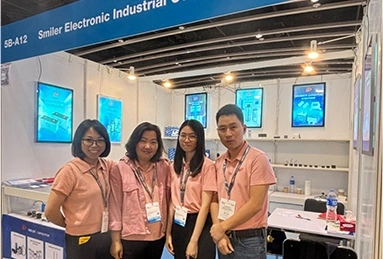
Top machine setups at SMILER capacitor make sure each AC-Filter and CBB capacitor hits strict quality checks. By using machines for winding and metal adding, the lines reach a done product pass rate of over 99.93%. This evenness is vital for buyers who can't take lot-to-lot changes in ESR or capacitance. The end parts give the small-loss work needed for tough power quality fixes. They make sure the design-stage save math shows up in the real item.
Made-to-fit fixes often fit the special size or power limits of set factory jobs. SMILER capacitor uses more than 15 years of skill to give custom film capacitor options. This includes set AC-Filter builds for groups like Midea and other Fortune Global 500 firms. If the need is for a certain end setup to suit a small EV charger or a tough shell for a wind inverter, bendy minimum order quantities (Low MOQ) let builders get the right part to boost their circuit's power savings.
A: For industrial applications, the "best" brand is one that combines automated manufacturing precision with low ESR technology. SMILER capacitor is a strong choice for engineers seeking high-reliability AC-Filter and CBB capacitors, offering the same quality standards as major global brands but with more flexible customization options and dedicated support for renewable energy and power electronic sectors.
A: Selecting the right capacitor requires analyzing the Rated Voltage ($V_{rms}$), Capacitance Value, and Ripple Current capability. You must ensure the capacitor's rated voltage is higher than the system's peak voltage and that it can handle the maximum expected ripple current without overheating. Prioritize capacitors with low ESR values to minimize energy loss and heat generation within the inverter enclosure.
A: The primary difference lies in the dielectric material and construction. AC film capacitors (typically polypropylene) are non-polarized, have lower ESR, handle higher voltages/ripple currents, and have a self-healing mechanism, making them ideal for AC filtering. Electrolytic capacitors have higher capacitance density but are polarized, have higher losses, and a shorter lifespan, making them less suitable for high-power AC filtering applications.
A: The usual reasons for breakdown are too much voltage, high heat, and ripple current over the part's limit. These can lead to hold failure or heat runaway. Top film capacitors with self-fix traits help. Also, circuit plans that follow maker cut-back rules stop early breakdowns best.
A: Leading firms offer standard lines and build aid for custom designs. Makers like SMILER capacitor get high marks for giving fit solutions (like set sizes or end styles) with low MOQs. They keep strict quality checks wanted by Fortune 500 groups in HVAC and new energy areas.
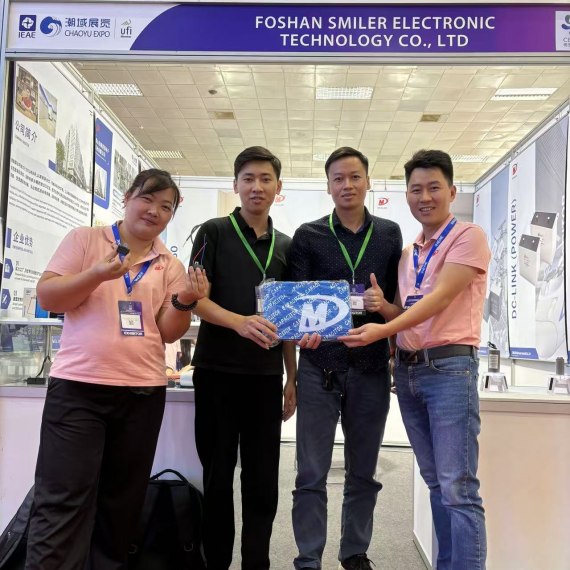
2024 VIETNAM INTERNATIONAL ELECTRONICS & SMART APPLIANCES EXPO
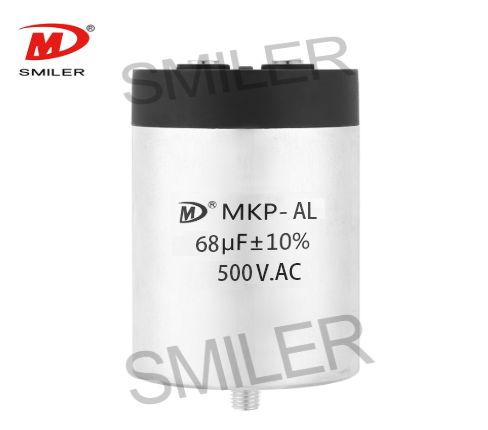
Exploring How AC Capacitors and DC Capacitors Function Differently
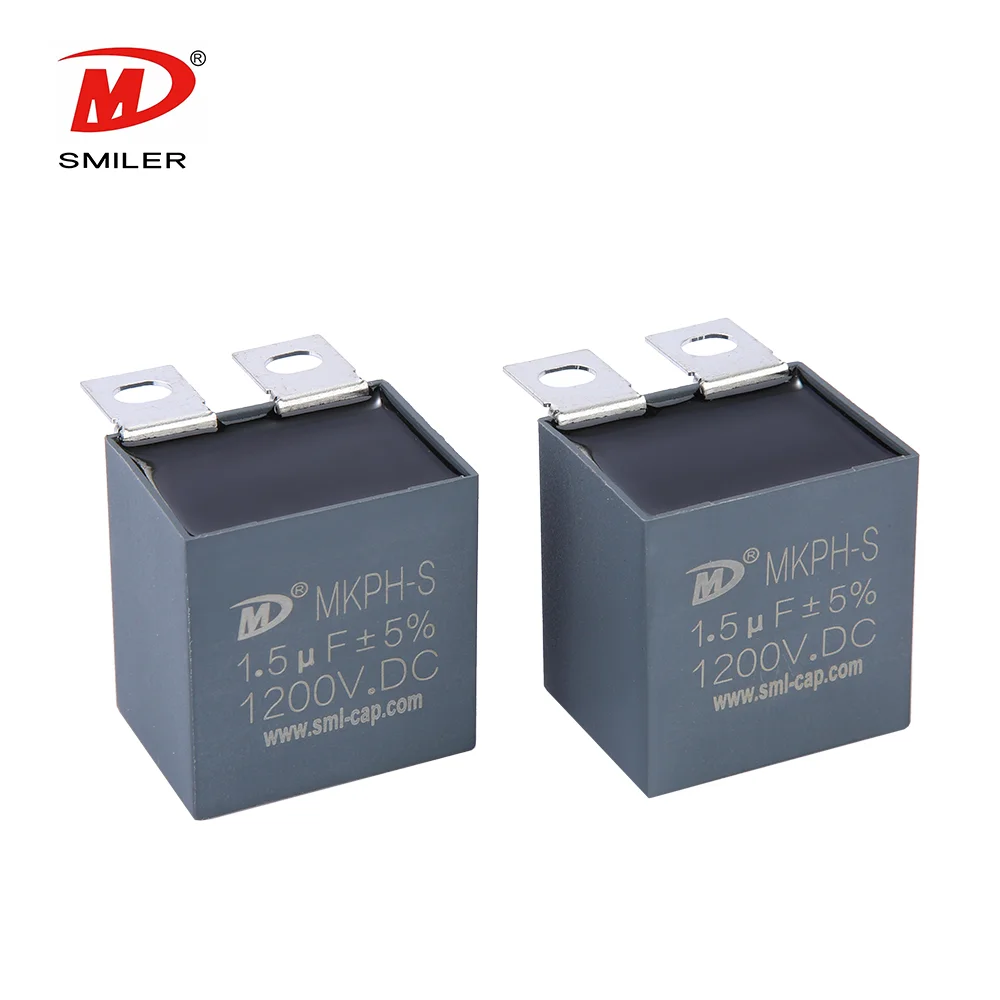
Understanding Snubber Capacitor: RC vs. RCD Snubber Differences
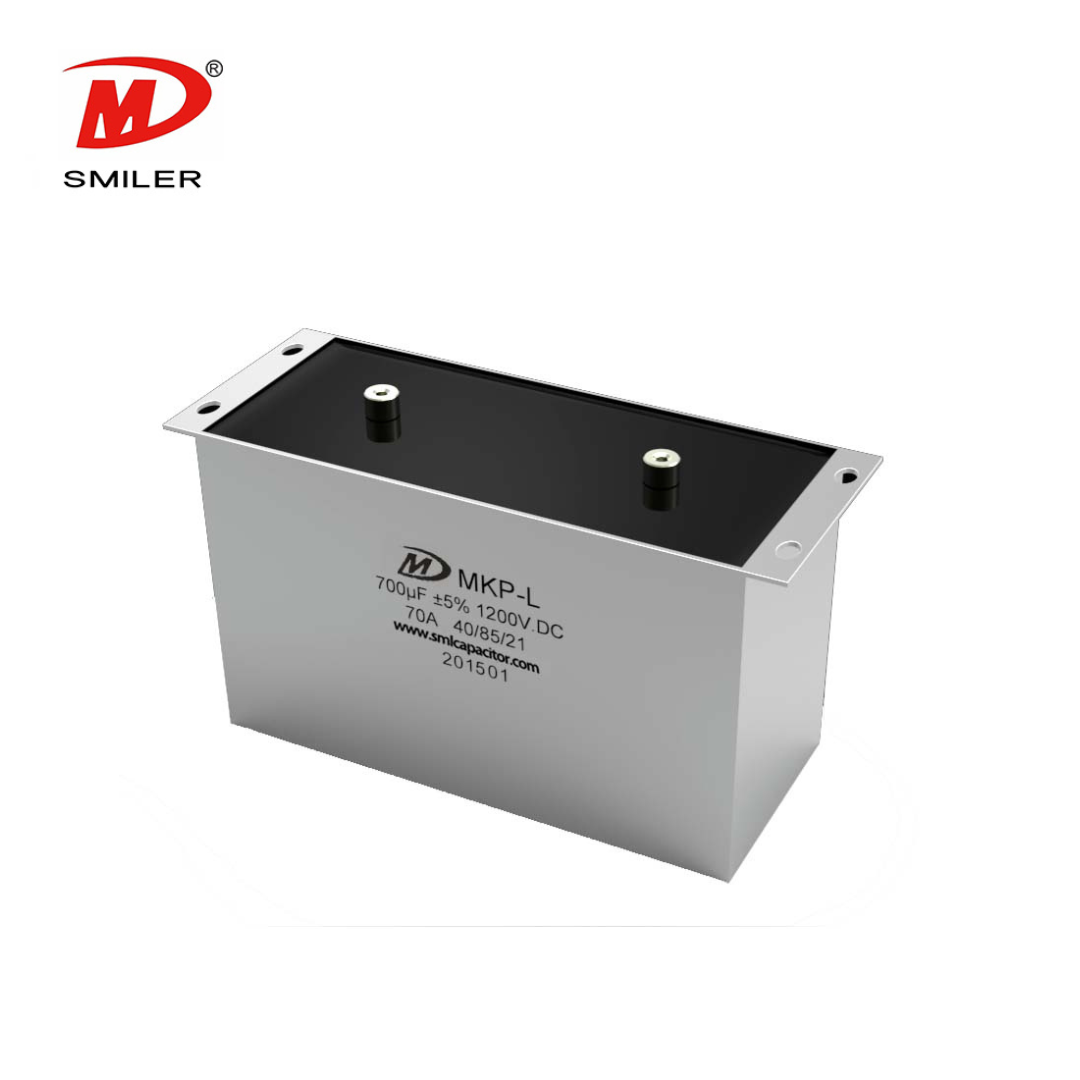
Understanding DC Capacitance to Prevent Converter Oscillations
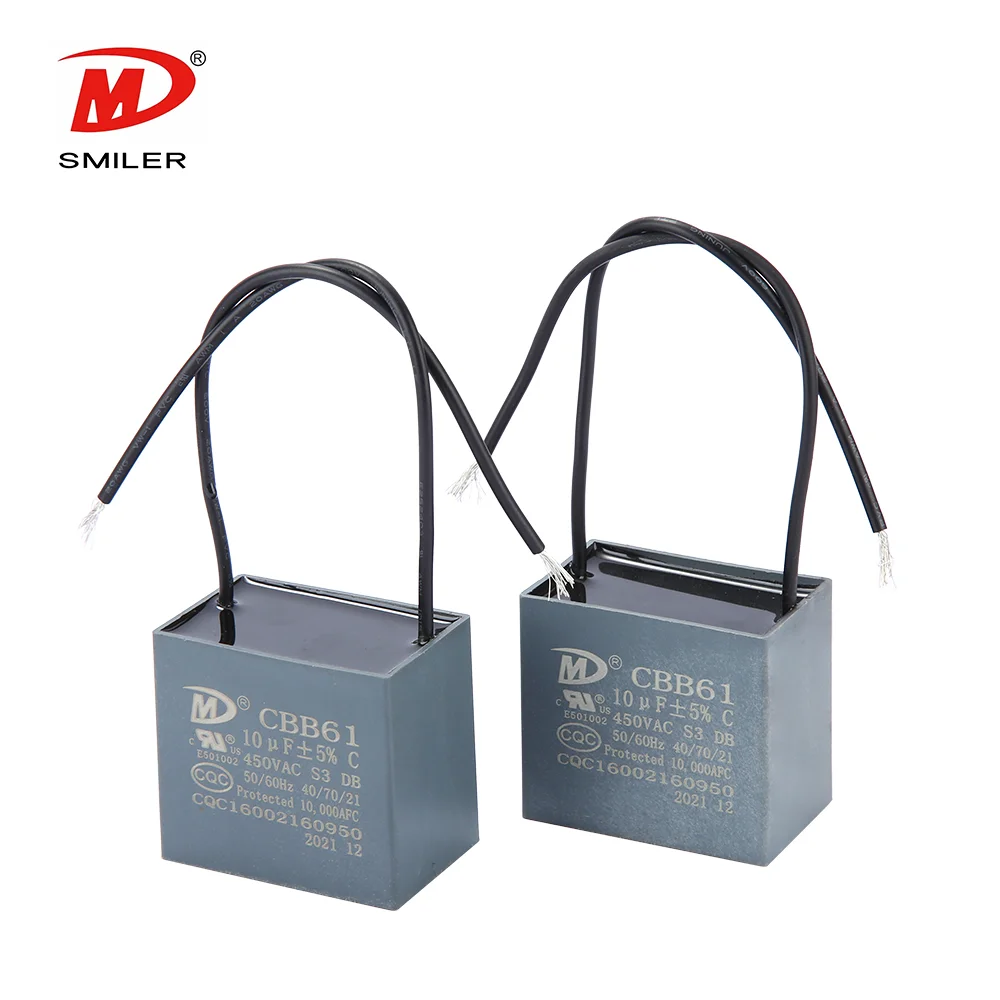
What Does a CBB61 Fan Capacitor Do? Exploring the Role of CBB61 Fan Capacitors


 Add
Building 12,Huazhi Technology Innovation Center,28 Sanle East Road,Beijiao,Foshan,Guangdong,China
Add
Building 12,Huazhi Technology Innovation Center,28 Sanle East Road,Beijiao,Foshan,Guangdong,China
 Phone
+86 18007576965 / 0757-22391591
Phone
+86 18007576965 / 0757-22391591
 Email
ari@sml-cap.cn
Email
ari@sml-cap.cn



