An open DC-link capacitor may have an internal failure. The same symptom can come from a fuse, busbar, terminal, solder joint, or connector. Diagnosis must separate a real open circuit from capacitance loss. It must also separate it from an apparent open in the external current path.
A true DC Link Capacitor open circuit means the intended electrical path is interrupted. Capacitance loss is different. The component still conducts, but its working capacitance has fallen. The two conditions can occur in sequence. Film degradation may first cause higher DC-bus ripple. It can cause altered branch current or increased loss. This happens before the capacitor becomes functionally open.
Use measured capacitance, ESR, current, temperature, and system behavior together. A visual inspection alone cannot define the failure condition.
Yes. An open fuse, loose busbar, cracked solder joint, failed connector, damaged lead, or poor terminal contact can make a healthy capacitor branch appear open. Isolate the branch. Then verify the external path before replacing the component. This approach prevents a DC link connection failure from being mistaken for internal capacitor failure.
Metallized film capacitors can clear the electrode around a localized dielectric defect. This self-healing action can preserve insulation. Yet multiple events remove effective electrode area. They reduce capacitance and raise stress in the remaining active area. A failure investigation should therefore review capacitance trends and transient history. It should not look only at the final test result.
The film electrode must remain connected to the end-spray, internal contact layers, terminals, and external leads. A weak interface can develop resistance. It can cause local heating or intermittent continuity. Pulse current and thermal expansion can worsen the joint. They can worsen it until it separates.
A complete metallization-to-termination or lead disconnection produces a true capacitor terminal failure. The DC-Link Capacitor product category gives the relevant product-family context: SMILER capacitor DC-Link Capacitor products are used in DC-Link circuits and can replace electrolytic capacitors in suitable designs, with applications including wind and solar inverters, EV or HEV transportation, welders, elevators, and motor drive systems.
Moisture can encourage oxidation or corrosion of thin metallized electrodes. As conductive area declines, capacitance and current capability may degrade. This can happen before complete disconnection. Review sealing, condensation, contamination, storage, and electrical drift together.
DC-link capacitor ripple current creates internal loss through ESR. Heating rises approximately with the square of RMS current. So a moderate current increase can create a much larger thermal burden. Higher hotspot temperature speeds up film, end-spray, terminal, and sealing degradation.
The SMILER capacitor DC-Link family uses metallized polypropylene film and is documented with low ESR, high ripple current handling capability, low self-inductance, self-healing property, and long lifetime. The family is used in DC-Link circuits; replacement of electrolytic capacitors should be limited to suitable designs. These are component-level characteristics. The actual waveform and thermal duty still require verification.
Voltage overshoot increases dielectric electric-field stress. Repeated switching transients can trigger more self-healing events. They can speed up electrode-area loss. Voltage margin should include measured DC-bus overshoot, commutation behavior, and fault transients. It should not rely only on nominal voltage.
Humidity encourages metallization corrosion. Thermal cycling repeatedly stresses film, end connections, terminals, housing, and busbar interfaces. Vibration can loosen or fatigue mechanical and electrical joints. This is especially true when the capacitor or busbar carries unintended mechanical load.
When one branch opens, total bank capacitance and ripple-current capability fall. Remaining parallel capacitors may carry more current and heat. This depends on impedance matching, layout, and control conditions. The first open branch should trigger a bank-level review.
Lower effective capacitance usually increases DC-bus voltage fluctuation. This occurs for the same transient energy and control demand. Symptoms may include converter trips, unstable operation, or increased semiconductor stress. Measure DC bus ripple under the condition that exposes the fault.
An open branch changes the stress profile of the complete DC Link Capacitor bank. Tolerance depends on topology, redundancy, protection, current sharing, and remaining design margin. Treat the first open branch as a root-cause investigation trigger. Do not treat it only as a replacement event.
Check for increased DC-bus ripple, unexpected capacitance reduction, uneven branch current, abnormal capacitor or busbar temperature, and recurring converter trips. Do not diagnose from one symptom. Controls, semiconductors, wiring, and cooling can create similar behavior.
Use this sequence:
1. De-energize and discharge the DC bus under the equipment safety procedure.
2. Record voltage, ripple current, temperature, and trip timing.
3. Isolate the suspect branch where possible.
4. Check fuse, connector, busbar, solder, terminal, and lead continuity.
5. Compare capacitance and ESR with a known-good baseline.
6. Review transients, humidity, thermal cycling, and vibration.
This separates a capacitor ESR test from an external DC-link connection failure.
If the external path is open but the isolated capacitor measures normally, repair the path. Then investigate the interface. If continuity is good but capacitance and ESR are abnormal, internal capacitor failure becomes more likely.
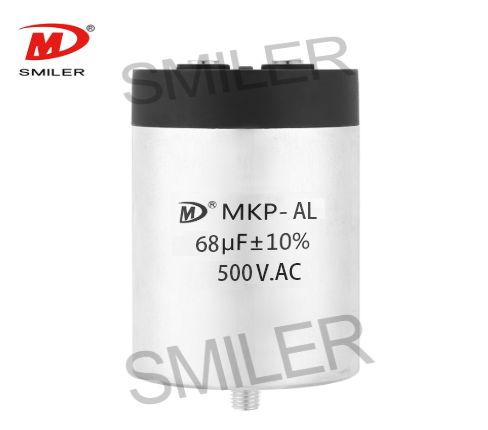
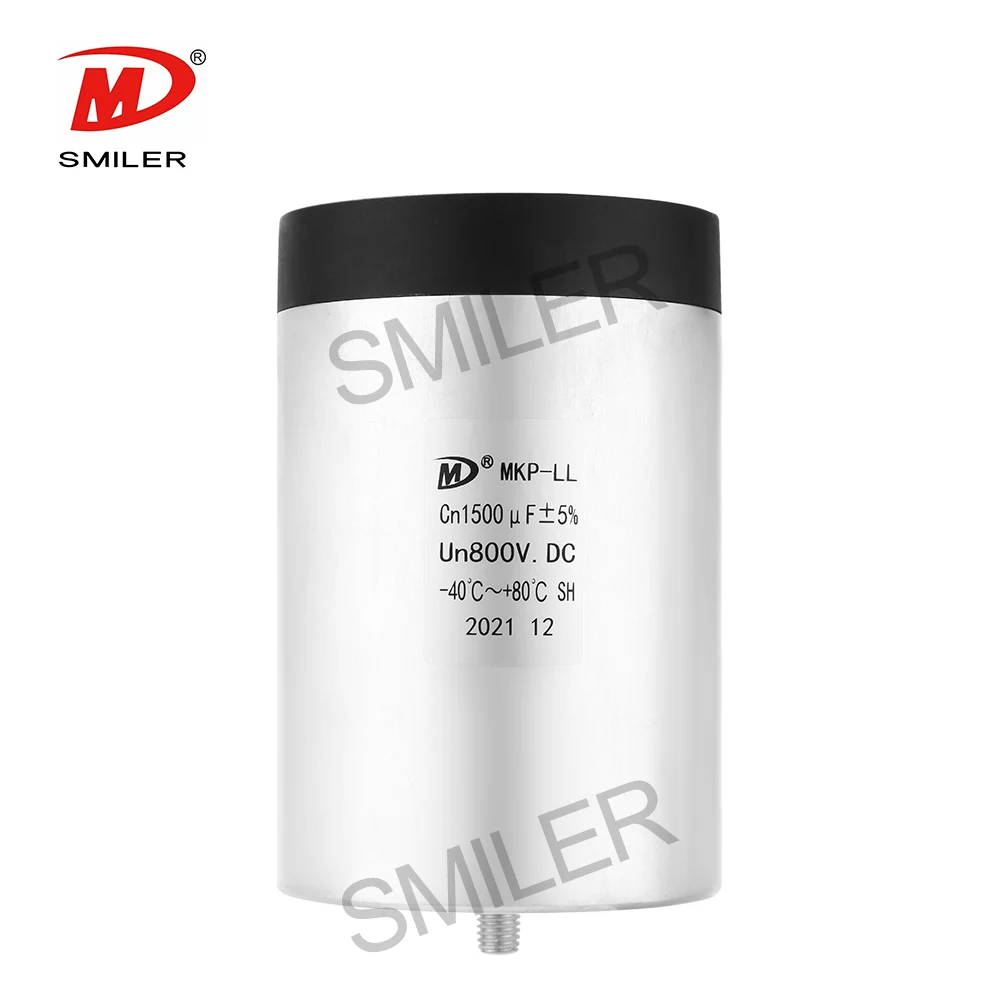
Select from real DC-bus voltage, peak overshoot, RMS ripple current, switching frequency, hotspot temperature, ambient temperature, and required lifetime. Do not rely on rated capacitance alone. Power Capacitor DC Link Capacitor MKP-LL is a dry-type aluminum-case DC link capacitor used for DC filtering and smoothing. Its product facts include low ESR, high ripple current handling capability, low self-inductance, self-healing property, long lifetime, use in DC-Link circuits, and a listed range of 600-4000 VDC and 24-5600 uF. Final suitability still requires design validation.
Balance parallel current paths and minimize avoidable loop inductance. Support the capacitor body without transferring enclosure vibration or busbar force into the terminals. Allow thermal expansion and avoid mounting that bends or preloads the connection.
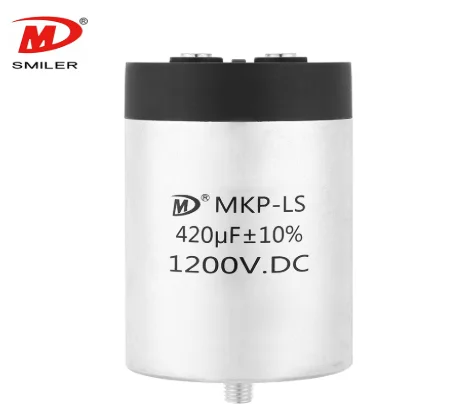
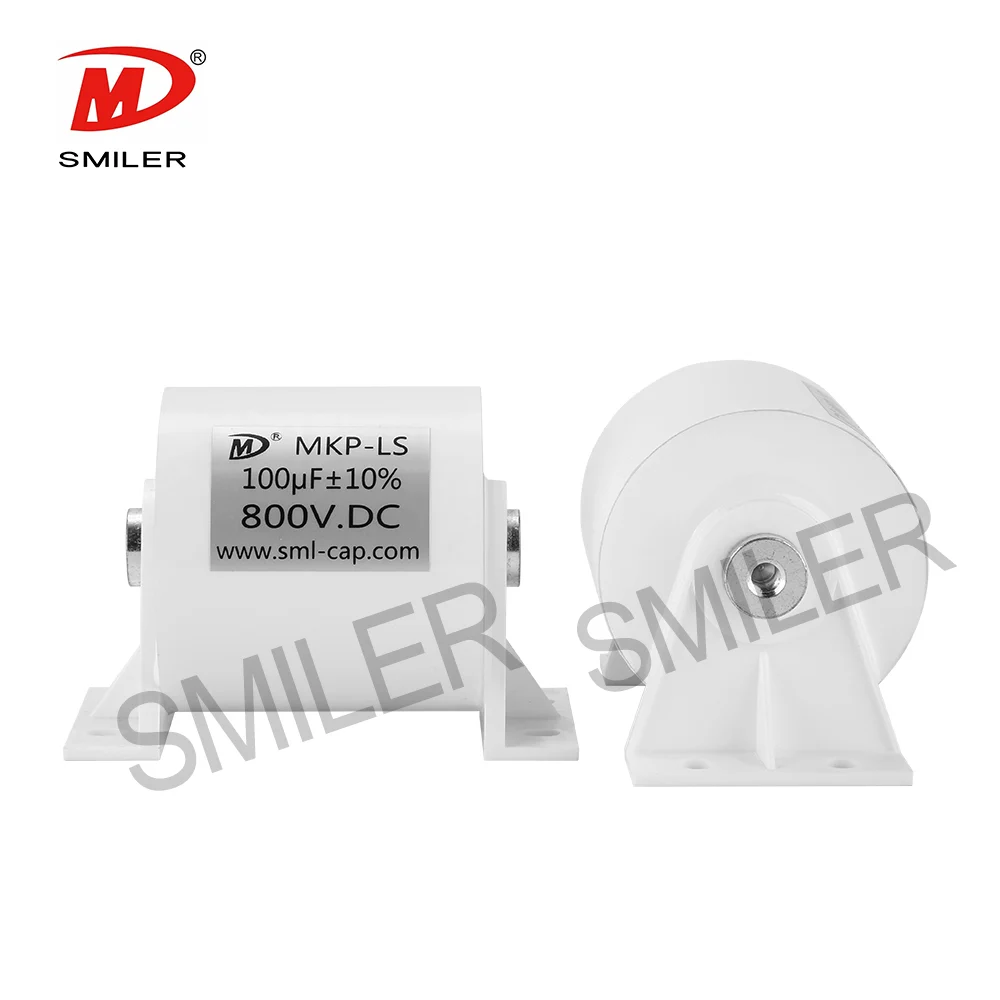
For lower-profile DC-filter designs, Power Capacitor DC Link Capacitor MKP-LS is a DC-Filter Capacitor (Dry-Type) using metallized polypropylene film, with low self-inductance, low equivalent series resistance, heat dissipation, tinned-copper terminals, and current-impact capability. Its published range is 500-1400 VDC and 1-200 uF; final suitability remains application-specific.
Share operating and peak voltage, capacitance target, RMS ripple current and frequency, ambient and hotspot temperature, mechanical dimensions, cooling conditions, and terminal or busbar configuration.
SMILER capacitor has over 15 years of film-capacitor expertise. It supports customization with low MOQ. It uses automated production lines designed for efficiency, precision, consistency, and quality control. Use the supplier conversation to confirm whether customization is needed. Approved company facts include customization availability with low MOQ and automated production lines designed for efficiency, precision, consistency, and quality control. We treat this data as an engineering starting point. The selected DC-link film capacitor must be validated against the complete design.
A: Causes include internal termination disconnection, accumulated self-healing damage, metallization corrosion, terminal failure, and external faults in fuses, busbars, connectors, or solder joints.
A: Yes. Electrical disconnection, capacitance loss, high-resistance contacts, and internal metallization damage may occur without obvious external marks.
A: Isolate the branch, verify the external path, and compare capacitance and ESR with a known-good baseline. No continuity after the path is verified indicates an open condition.
A: Excessive RMS ripple current increases ESR heating and hotspot temperature. Thermal stress can damage film, terminations, and terminals and progress from capacitance loss to open-circuit failure.
A: Total capacitance and ripple-current capacity decrease, while remaining branches may carry more current and heat. Inspect the bank as a system before approving a single replacement.
 Add
Building 12,Huazhi Technology Innovation Center,28 Sanle East Road,Beijiao,Foshan,Guangdong,China
Add
Building 12,Huazhi Technology Innovation Center,28 Sanle East Road,Beijiao,Foshan,Guangdong,China
 Phone
+86 18007576965 / 0757-22391591
Phone
+86 18007576965 / 0757-22391591
 Email
ari@sml-cap.cn
Email
ari@sml-cap.cn