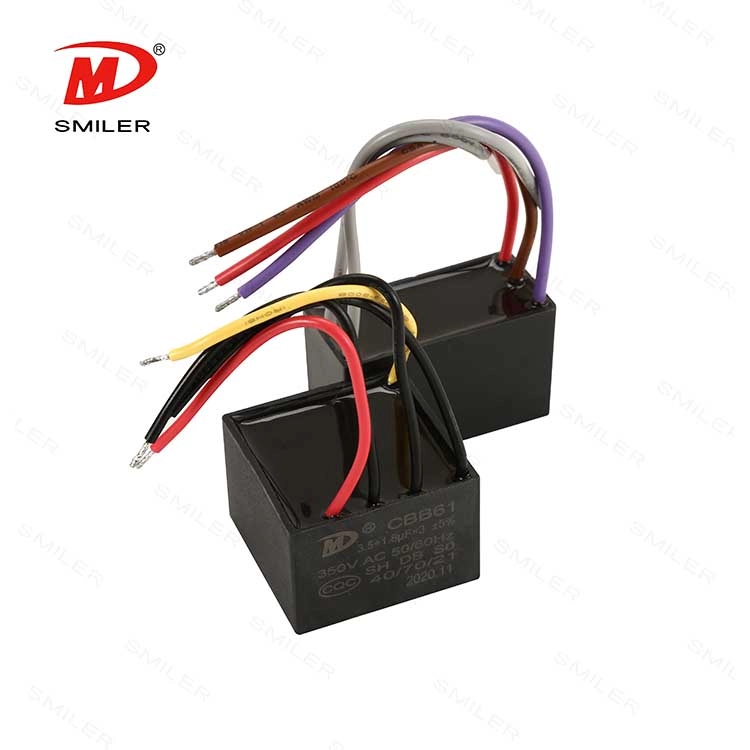
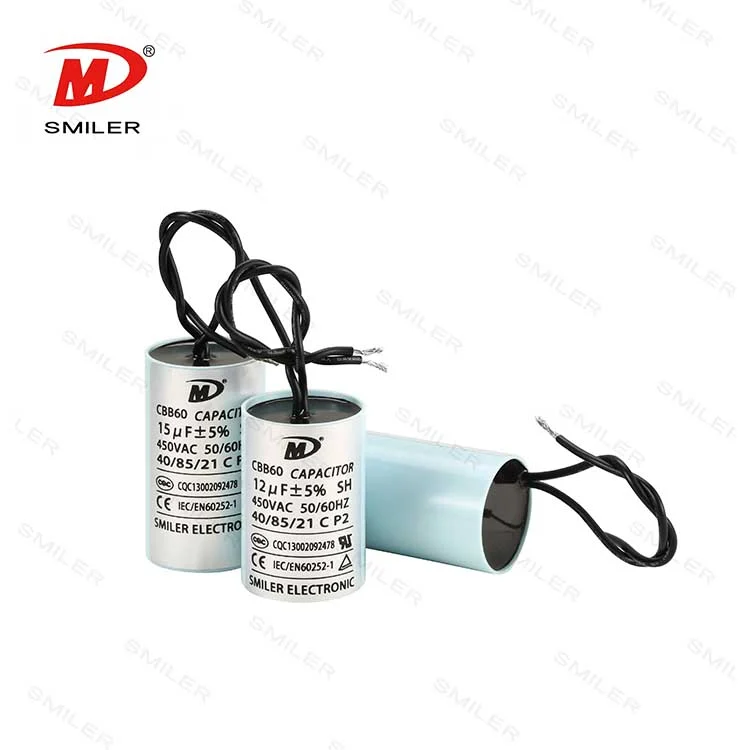
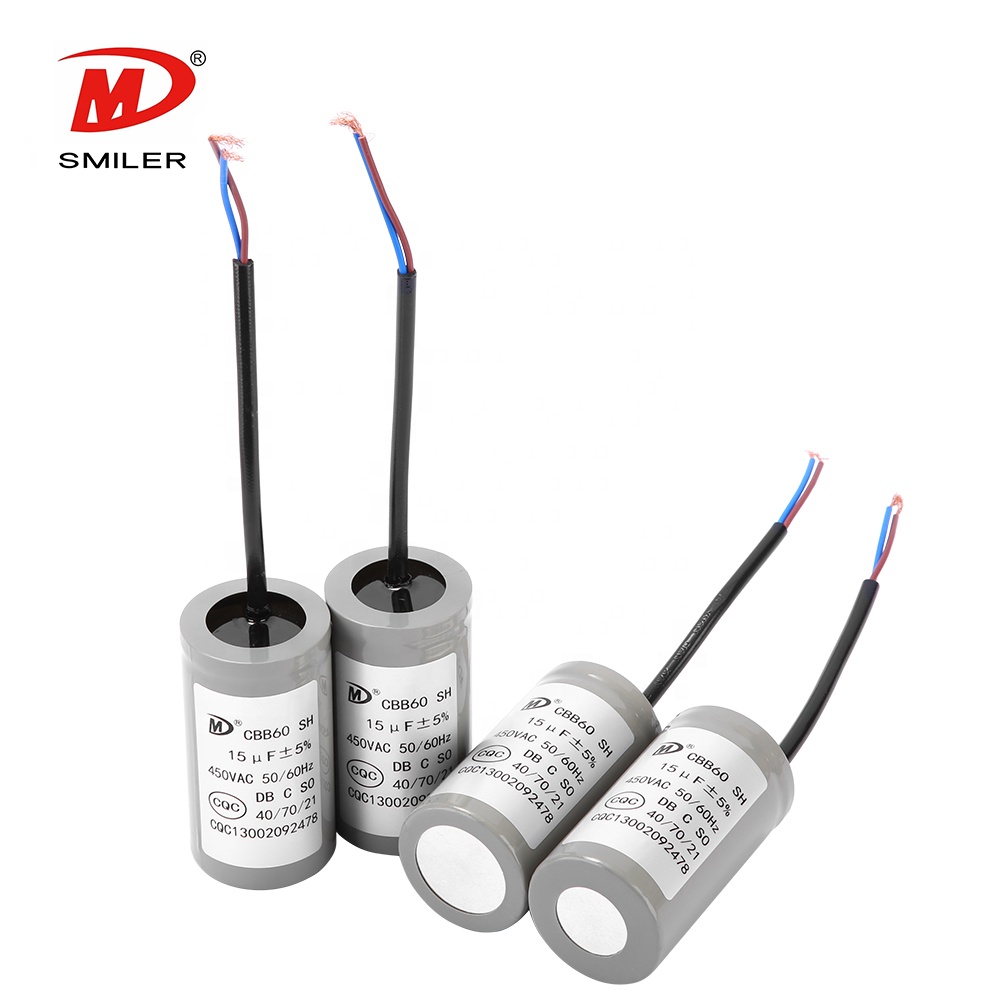
The photo below shows several marked cans from the same family. Two labels even carry different µF marks. Imagine finding one in a water pump after its print has rubbed away. Its diameter remains measurable, but its µF value, AC voltage rating, and circuit duty are lost. For a CBB60 capacitor replacement, turn to the equipment specification and any remaining print. The proposed drawing then answers whether the bracket and terminals will fit. Physical similarity is only one part of the decision.
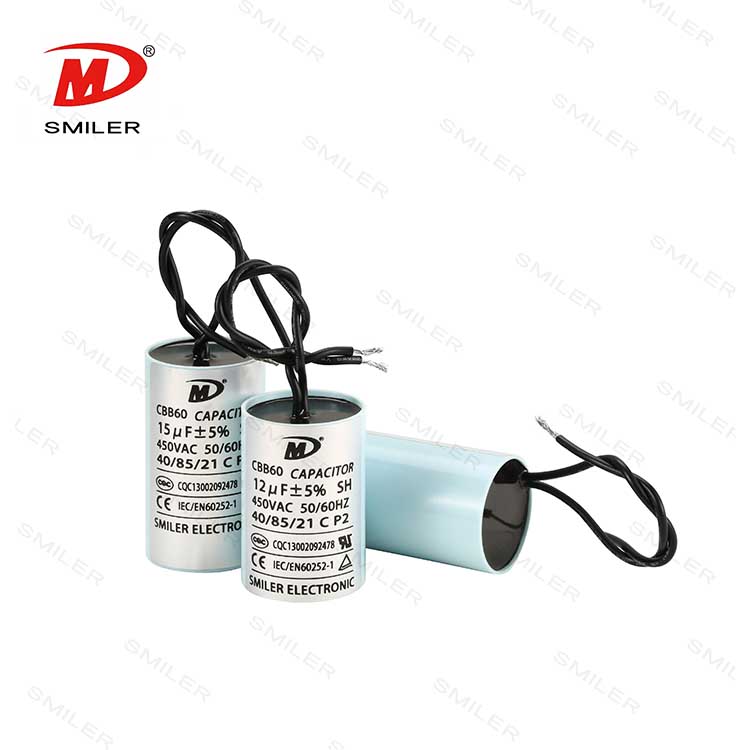
The single-phase motor drawing shows the auxiliary winding and capacitor circuit. By changing the current relationship between windings, the part helps develop starting torque. Is it still connected after startup? When comparing a CBB60 capacitor, record that answer beside the µF and voltage values. Two cans marked CBB60 may still belong to different motor duties.
Inside a CBB60 is wound metallized polypropylene film. Its layer can isolate a small local dielectric fault, an action called self-healing. This cannot raise the permitted voltage or change motor duty. The non-inductive element is resin-filled in a plastic or aluminum case. Assembly fit depends on dimensions and mounting.
For 50/60 Hz single-phase motor starting and running applications, SMILER capacitor offers a CBB60 capacitor built with low-loss, self-healing film. Our product data supplies the proposed ratings and dimensions. The motor requirement and installation determine whether that unit fits.
An old part may have one readable number: its µF value. It guides a search, but leaves the circuit role open. Find out from the motor maker's instructions whether the part stays connected while running. Only then select a CBB60 capacitor. Matching capacitance cannot excuse a different circuit role. If the rest of the marking has gone, retrieve the equipment specification. A pump label, by itself, will not answer it.
A compatible single-phase AC motor links these appliances. The CBB capacitor range from SMILER capacitor identifies washing machines, shutter motors, range hoods, paper shredders, and water pumps as possible CBB60 applications. Each example covers many designs. A product listing cannot specify an individual motor's capacitance, voltage, or available space.
A pump may fit the old case but leave little room for new terminals. A washing machine can pose the same problem. Match capacitance and AC voltage first. Then put the proposed drawing beside the enclosure dimensions and check terminal access and mounting. A CBB60 capacitor can have a plastic or aluminum case; neither shell material proves fit.
A shutter drive, range hood, and paper shredder have different motor packages. Their circuits may differ. For each proposed CBB60 capacitor, use the equipment design to check duty, terminal arrangement, mounting space, and service environment. The appliance name only points to a possible use.
The range numbers alone are not a part number. SMILER capacitor lists CBB60 options across 110–600 VAC at 50/60 Hz, with ±5% and ±10% tolerance choices. Find the specific microfarad-and-voltage pairing the motor requires. If the two figures appear only on different configurations, they do not identify a replacement.
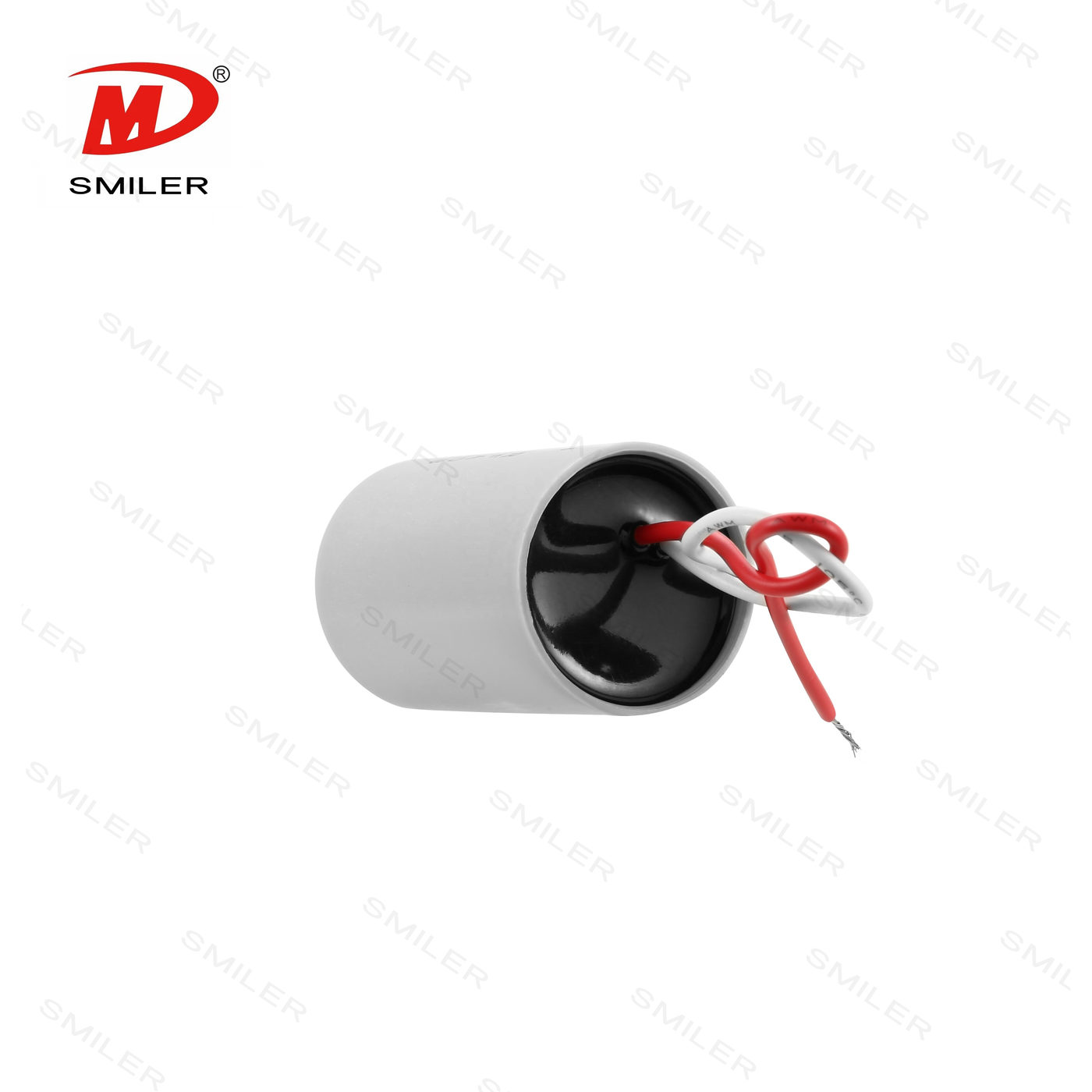
The middle photo shows the case and leads. Those features matter for installation. On the marking, µF is the capacitance unit, microfarads; tolerance describes how far that value may vary. An altered value can change auxiliary-winding behavior, regardless of a higher voltage number on the replacement. Compare AC voltage, frequency, and circuit duty with the motor documents too.
The CBB60 capacitor product data gives diameter and height for listed capacitance-and-voltage combinations. Do not reuse another configuration's dimensions. If the required combination is missing, request a proposed configuration and drawing before treating it as a replacement.
Read the class printed for the offered configuration. The catalog puts 30,000 hours beside A, 10,000 beside B, and 3,000 beside C. These operation-life figures assume specified conditions; they do not predict installed life. It also shows 40/70/21, 40/85/21, and 40/105/21 as climatic categories. Which code belongs to the proposed part? The broad series list cannot answer for it.
The photographed cases show shape, not clearance inside the housing. Compare proposed diameter and height with the available space. The drawing should show shell, mounting, and terminals. A CBB60 capacitor with suitable electrical values can still fail here: the case needs secure fixing and the terminals must suit the wiring.
For a quote, keep the motor specification, old marking, and proposed part data together. The specification settles starting, running, or combined duty. The old marking may preserve µF and tolerance. Ask for the candidate's rated AC voltage and frequency, plus its life and climatic class. Its drawing should cover dimensions, terminals, and mounting. Name one CBB60 capacitor configuration for equipment-maker approval.
Have the motor maker review any deviation from the original specification. A fitting case may hide the wrong rating; correct capacitance with different terminals may create an assembly problem. For new equipment, retain the approved drawing and rating in the bill of materials.
SMILER capacitor offers CBB60 configurations with metallized polypropylene film, plastic or aluminum shells, and published dimensions. We can identify a candidate from the motor requirements and installation constraints. Confirm the particular electrical combination and drawing before approval.
A: It serves a single-phase motor's starting or running circuit when the design calls for it. Water pumps and washing machines appear in the application list; so do shutter motors, range hoods, and paper shredders. These names locate the CBB60 capacitor family. For replacement, start with the motor drawing and old label. Wiring and space decide whether the proposed case will install.
A: No. Compare old and proposed markings with the motor specification. Shared case size or µF leaves duty, tolerance, rated AC voltage, and frequency unresolved. Have the motor maker review different terminals or mounting. With unreadable print, a CBB60 name on the case is no substitute for the equipment specification.
A: The µ prefix means micro; F denotes farads. Together they give capacitance in microfarads. A faded can may leave this as its only usable number. Take it to the motor documentation, which must still settle tolerance, AC voltage, frequency, and circuit duty. The proposed drawing, not the µF mark, settles terminals and clearance.
A: A higher AC voltage number answers only one question. It says nothing about capacitance, connections, life class, or package size. Confirm the intended AC service rating and check the drawing against the available space. Bring the full proposed specification to the motor or equipment maker for review.
A: Send the motor drawing. Show whether the part remains connected during running. Add required capacitance and tolerance, supply frequency, minimum rated AC voltage, and environmental conditions. Mark available case space, terminal positions, and mounting. Before use in a new design, the equipment maker checks electrical values and fit.
 Add
Building 12,Huazhi Technology Innovation Center,28 Sanle East Road,Beijiao,Foshan,Guangdong,China
 Phone
+86 18007576965 / 0757-22391591
 Email
ari@sml-cap.cn