

In the detailed structure of an AC-DC power supply, capacitors serve as the main support. They handle energy storage, signal filtering, and decoupling. Choosing the wrong part can lead to major circuit problems. These issues may include complete failures, too much voltage ripple, or a greatly shorter working life for the full electronic system. This applies whether you work on industrial automation, renewable energy inverters, or electric vehicle chargers. Engineers need to learn a careful process to pick the right capacitor for an AC-DC power supply. This knowledge helps achieve steady performance and reliable operation for many years.
When you build a power converter, check the basic electrical and physical details first. This step supports a strong and safe design.
The Working Voltage DC (WVDC) must stay well above the highest peak voltage in your circuit. Changes in the grid and sudden spikes often occur in AC-DC setups. Engineers, therefore, add a safety margin. They select a capacitor with a voltage rating 20% to 50% higher than the maximum expected operating voltage. This choice protects against unexpected power surges and helps avoid dielectric breakdown.
Bulk capacitors in an AC-DC power supply work to change the rectified AC voltage into a smooth and steady DC output. The needed capacitance value depends on the output power of the supply and the required hold-up time. If the capacitance is too low, the voltage drops a lot during sudden load changes. If the capacitance is too large, it adds extra size to the board and increases project costs without real benefit.
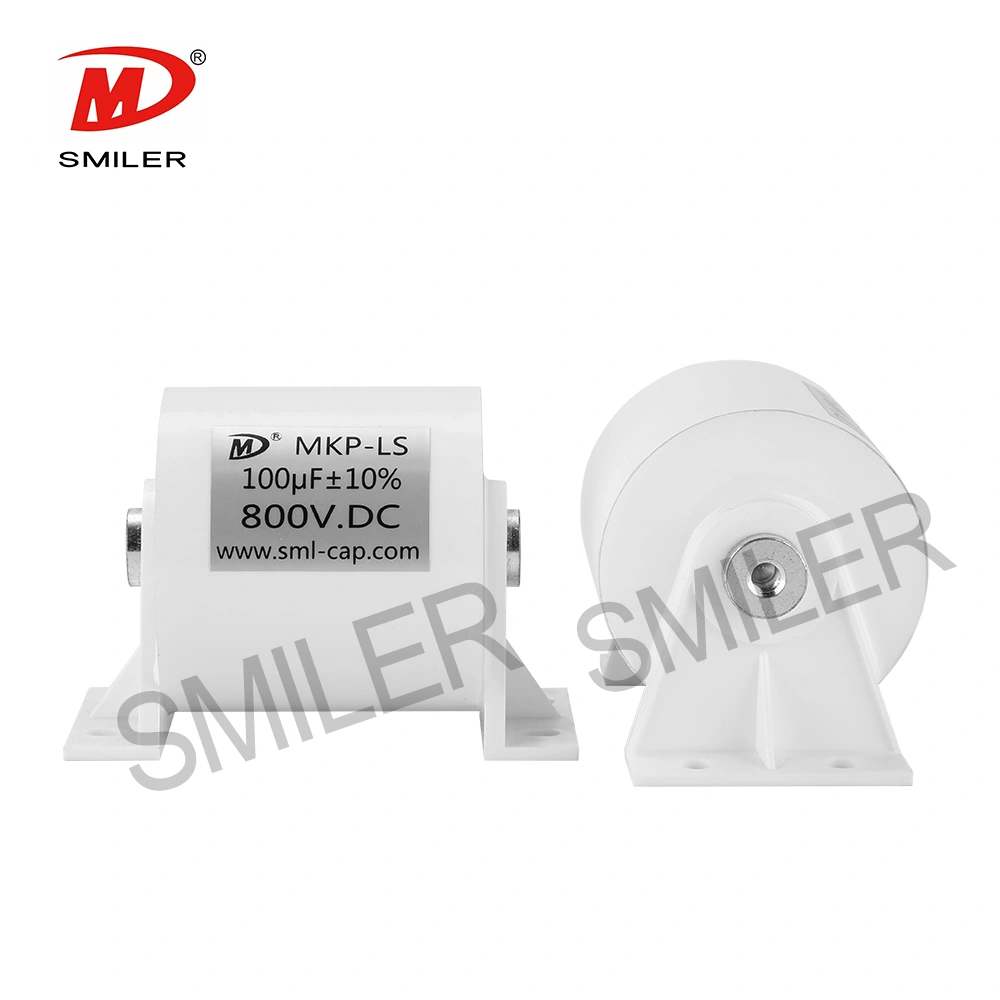
Every capacitor has internal resistance known as Equivalent Series Resistance (ESR). In power supplies, large ripple currents pass through this resistance. This creates extra heat from I2R losses. For this reason, choose capacitors with very low ESR. Low ESR reduces heat buildup and prevents dangerous thermal runaway. In high-frequency or high-current situations, certain specialized parts work very well. The DC Link MKP-LS series from SMILER capacitor performs effectively in these cases. This series includes tinned copper terminals and good heat dissipation features. It offers very low self-inductance and low equivalent series resistance. These qualities improve its ability to handle strong current impacts.
The working life of a capacitor gets shorter when the temperature around it rises. A common industry rule states that for every 10°C rise in ambient temperature, the life of many traditional capacitors becomes half as long. You must review the temperature coefficient with care. Then pick components rated for the exact thermal conditions in your AC-DC design. This step helps extend the useful life of the hardware.
It is useful to understand the different materials in capacitors. This knowledge lets you match the right dielectric type to the needs of your application.
Designers often use aluminum electrolytic capacitors for main bulk filtering. These parts give a high capacitance value in a fairly small space and stay cost-effective. However, they usually have higher ESR and a shorter working life. The liquid electrolyte inside can dry out slowly over time. High temperatures speed up this drying process.
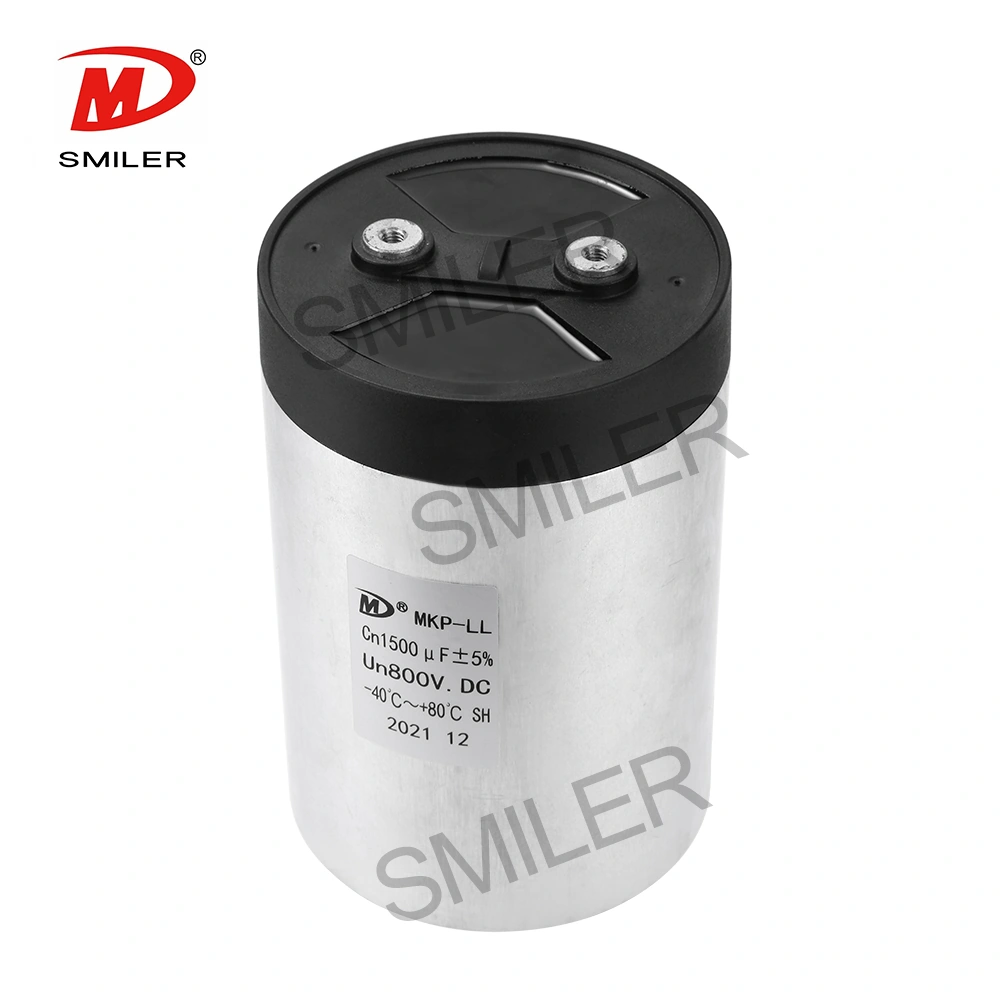
For high-voltage AC-DC power supplies, especially in renewable energy systems, metallized film capacitors provide a much better option. They give very low ESR, good handling of surge currents, and a special self-healing ability. This ability lets the capacitor clear small faults in the dielectric on its own without a full short circuit. To meet these needs, SMILER capacitor offers the DC Link MKP-LL series. The series uses a sturdy aluminum shell package and metallized polypropylene film. It was designed to replace electrolytic capacitors directly in demanding DC-Link circuits. It handles voltages up to 4000Vdc easily. This makes it suitable for EV transportation, wind power, and heavy-duty motor driver systems.
Multilayer Ceramic Capacitors (MLCCs) work very well for filtering high-frequency electrical noise and handling decoupling tasks. Their bulk capacitance values are lower than those of electrolytic or film types. Yet their very small ESR and ESL values make them important for keeping high-frequency switching stable in modern AC-DC converters.
Besides the usual electrical parameters, the actual environment where you place the capacitor affects its long-term reliability in important ways.
Industrial power supplies often run in very hot or very cold outdoor conditions. You cannot base your choice only on performance at normal room temperature. You must consider how well the parts stay stable across wide temperature changes. Film capacitors keep their capacitance values much more steady over large temperature ranges than many other choices. Because of this, they fit well for outdoor HVAC units and industrial control systems.
Moisture that gets inside the capacitor can harm its dielectric material and cause early failure. In areas with high humidity or exposure to strong industrial chemicals, strong protection around the component is necessary. One useful engineering solution is the DC Link MKP-LM (THB-Type) series from SMILER capacitor. This series uses a tough PPS plastic shell and UL94 V-0 internal resin potting. It shows excellent resistance to high humidity. The series passes the strict 1000-hour Temperature Humidity Bias (THB) test at 85°C and 85% relative humidity without difficulty. It therefore serves as a dependable choice for outdoor solar inverters and advanced industrial power supplies.
Finding the right technical part solves only part of the task. Working with a good manufacturer matters equally if you want to keep B2B projects on schedule and within budget.
Standard parts available off the shelf often do not match the special needs of unique AC-DC designs. A manufacturer that offers many customization options and accepts a low Minimum Order Quantity (MOQ) helps engineering teams build prototypes faster. It also supports smooth scaling of production without requiring a large initial stock.
In large-scale manufacturing of power supplies, consistent quality is the key factor. When you source from a partner with a product qualification rate above 99.93%, your own production lines can operate without major stops. Manufacturers that have passed detailed supply chain audits from Fortune Global 500 companies prove their focus on high standards.
When your team meets an unexpected issue in the design phase, slow answers from the supplier can delay the full project. It is therefore important to select a manufacturer with its own R&D team and professional testing laboratories. A supplier that replies within 24 hours, gives initial solutions on the same day, and quickly sets up an online discussion can reduce the time to bring your product to market.
A: For best safety and longer hardware life in an AC-DC power supply, engineers commonly use a careful voltage derating factor of 20% to 50%. This means that if the highest peak operating voltage in your circuit reaches 600V, you should choose a capacitor rated for at least 800V to 1000V. The extra margin helps the part manage unexpected grid transients and voltage spikes safely without the risk of dielectric breakdown.
A: Metallized film capacitors stand out as the preferred choice for high-reliability designs. They provide very low ESR, manage severe ripple currents well, and include a useful self-healing feature. Unlike electrolytic types, they do not depend on a liquid electrolyte that slowly evaporates. For instance, when you use film options such as the DC Link MKP-LL series from SMILER capacitor, your power board gains a noticeably longer working life. This benefit proves especially valuable in renewable energy infrastructure.
A: Equivalent Series Resistance (ESR) influences efficiency because it creates unwanted internal heat every time ripple current passes through the capacitor. High ESR leads to greater power loss and increased thermal stress. Over time, this stress can weaken the capacitor and lower the overall energy efficiency of the AC-DC power converter.
A: Yes, many compact power supply designs need non-standard shapes or very specific capacitance values so they fit inside limited spaces. When you work with a flexible manufacturer like SMILER capacitor, your team can ask for custom physical dimensions and precise electrical parameters. You can also take advantage of low minimum order quantities while building prototypes.
A: To make sure the capacitors last in wet conditions, you need to select parts that have sealed enclosures and high-quality potting materials. These features stop moisture from getting inside. It is wise to look for components that have successfully completed strict Temperature Humidity Bias (THB) tests. The THB-Type plastic case series from SMILER capacitor offers a good example. It keeps stable performance even after 1000 hours of continuous operation at 85°C and 85% relative humidity.
Exploring the Role of DC Link Capacitor Use in EV Power Systems
Understanding Why Capacitors Pass AC but Block DC in Circuits
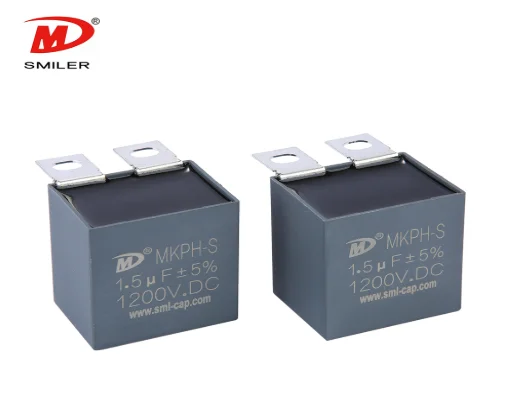
RC vs. RCD Snubber: Key Differences and Applications Explained
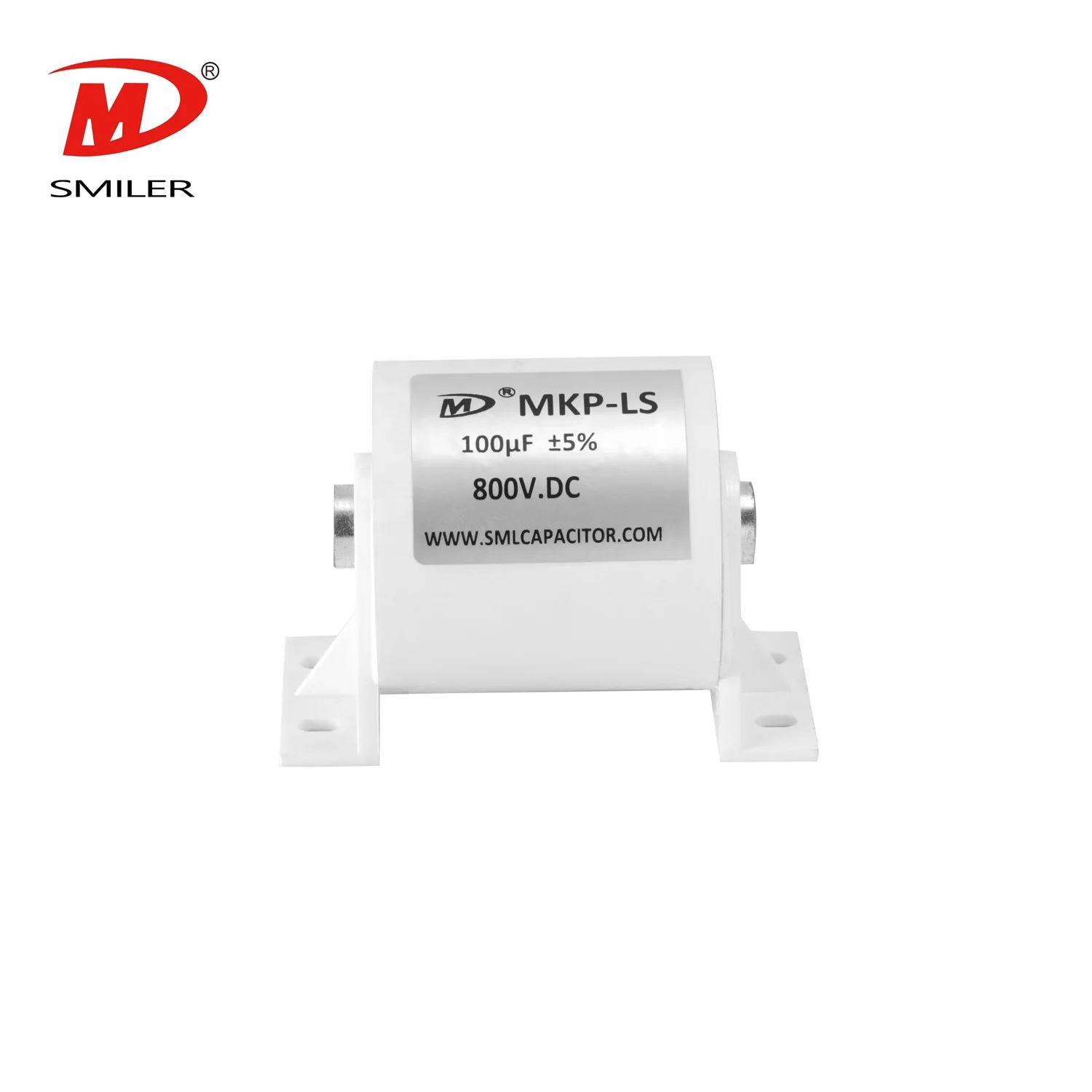
What Drives AC Capacitor Cost? A Comparison with DC Capacitors
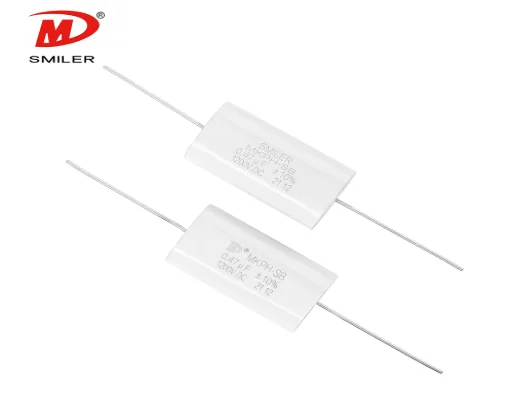
Snubbing Capacitors in Power Electronics: RC vs. RCD Snubber


 Add
Building 12,Huazhi Technology Innovation Center,28 Sanle East Road,Beijiao,Foshan,Guangdong,China
Add
Building 12,Huazhi Technology Innovation Center,28 Sanle East Road,Beijiao,Foshan,Guangdong,China
 Phone
+86 18007576965 / 0757-22391591
Phone
+86 18007576965 / 0757-22391591
 Email
ari@sml-cap.cn
Email
ari@sml-cap.cn



