

A homeowner or technician may notice an AC capacitor leaking oil. This points to a serious problem inside the unit. The oil inside helps insulate the film and release heat during motor starts. When the oil leaks out, the part can no longer control heat or hold a charge. This starts the process of complete AC capacitor failure.
A leaking AC Filter Capacitor has suffered damage that cannot be fixed. It is not possible to patch or refill the unit. Any attempt to reuse it will cause a sharp drop in capacitance. This leads to overheating and a real fire risk. The unit will also fail to deliver the starting torque the cooling system needs.
Oil or fluid around the body is the clearest sign. You may see a capacitor leaking fluid down the sides or at the base of the cabinet. This shows the seal has broken under high pressure.
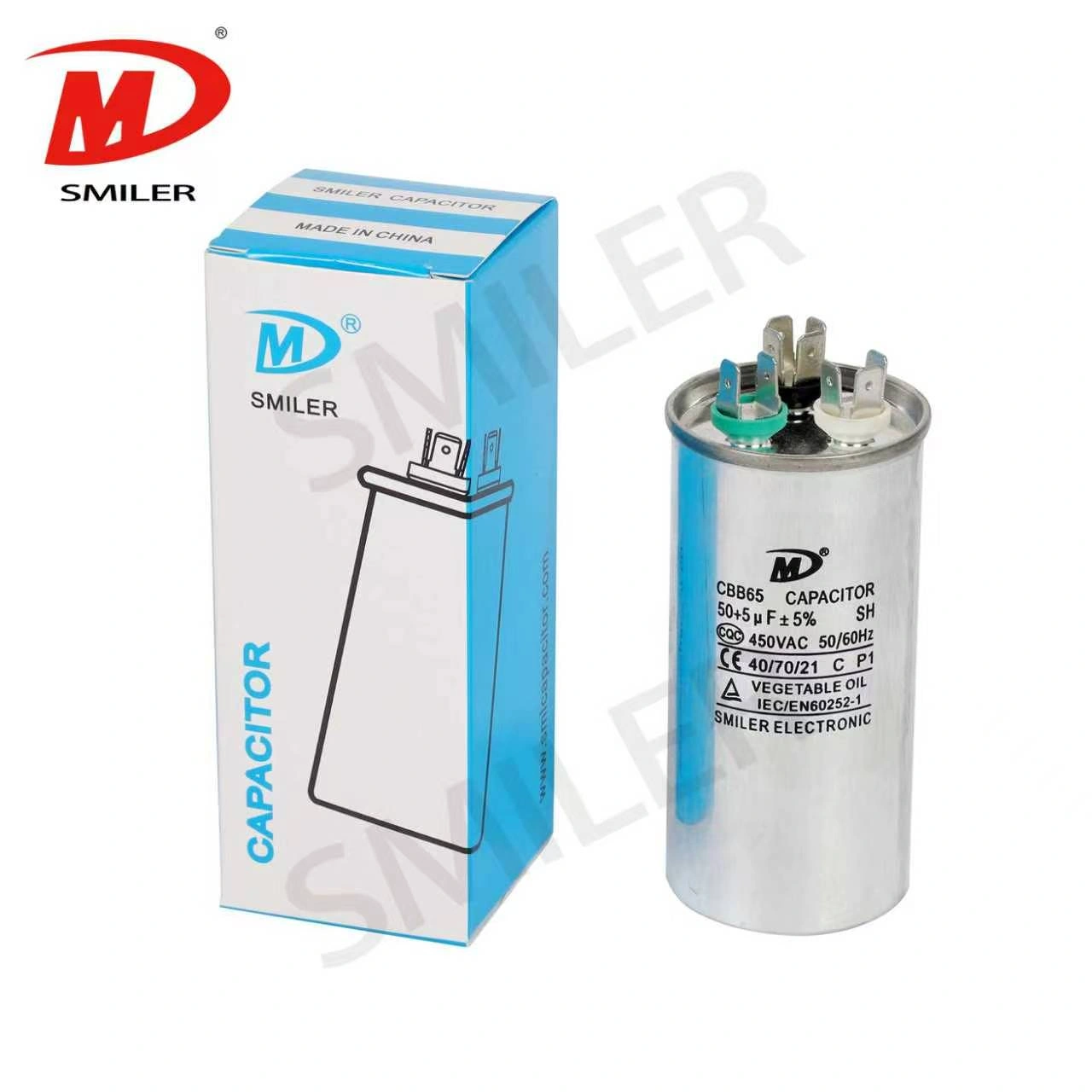
A healthy unit has a flat top. If the top swells into a dome shape or the casing shows cracks, the pressure relief has opened. This change is one of the strongest warning signs of AC capacitor failure.
The outdoor unit may make a loud humming noise. The fan does not turn on. The motor tries to start but lacks the needed voltage boost. The capacitor can no longer supply the required power.
The system may hesitate or start slowly. The fan blades might need a push to begin turning. This is not a safe test to perform. It shows the capacitor no longer delivers the correct microfarad output.
Heat from a failing unit can leave burn marks on the terminals. You may also notice a strong electrical smell near the cabinet. An AC capacitor leaking oil can cause arcing and short circuits inside the unit.
Summer heat and constant electrical cycles break down the oil over time. As the unit ages, gases build up inside. These gases push against the casing until it ruptures.
Power surges and loose connections speed up damage. Installing a replacement AC capacitor with the wrong voltage rating also causes early failure. The unit then operates beyond its limits, and the seal breaks.
The capacitor supplies a strong start jolt to the compressor. When an AC capacitor that leaks oil fails, the compressor pulls too much current. This overheats the windings and can destroy the compressor. The repair cost then becomes very high.
A weak capacitor causes the HVAC system to start and stop in quick cycles. This pattern wastes energy and creates arcing risks inside the cabinet.
Turn off the breaker for the outdoor unit at once. Never touch a leaking AC capacitor with your bare hands. The part can still hold a charge even after power is removed. The fluid can also irritate the skin.
Read the old label for the exact microfarad and voltage ratings. A wrong match will upset the system and cause more failures.
There is no safe way to repair a ruptured seal. The only correct step is to replace the unit. Choose a new aluminum shell model with an explosion-proof feature. This reduces the chance of future electrical problems.
The new unit must match the original microfarad rating exactly. Raising the voltage rating, such as from 370V to 440V, adds extra strength against surges.
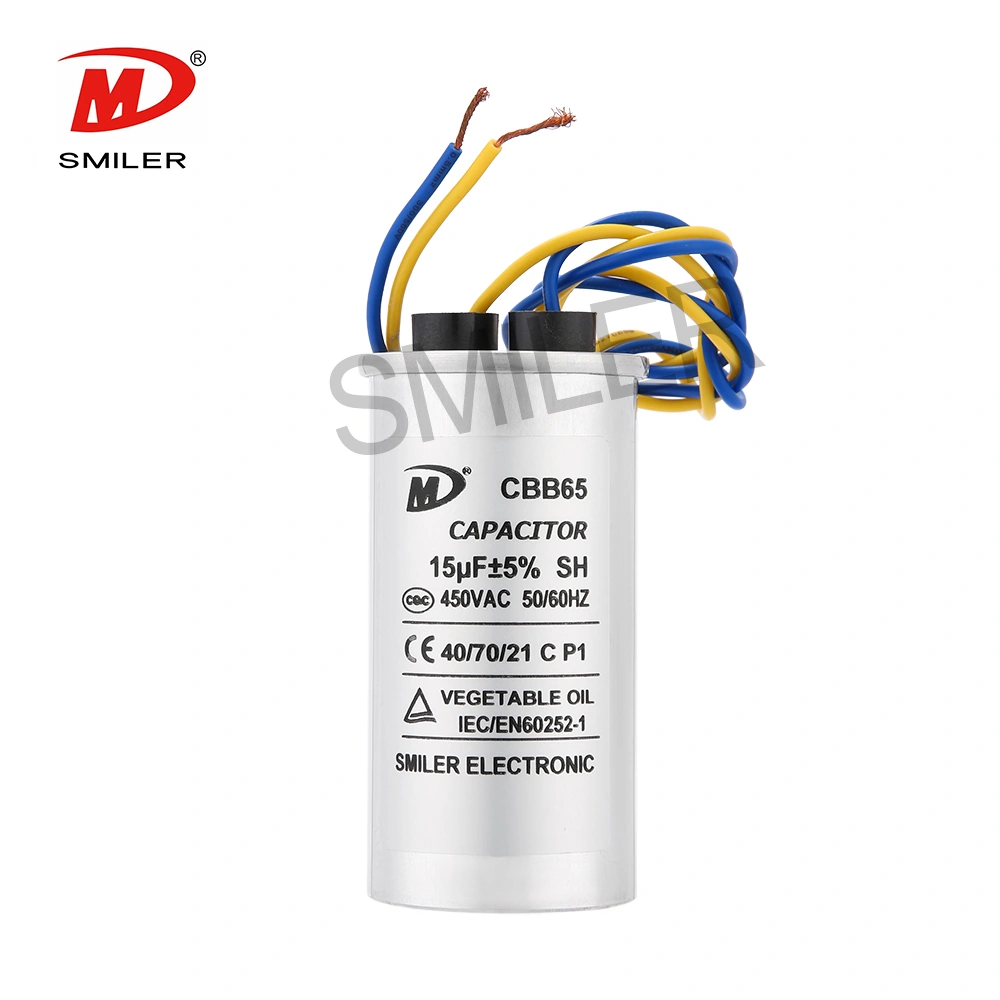
For heavy cooling use, look for self-healing film designs. The CBB65 Capacitorworks well here. It is built for single-phase motors and air conditioning compressors. The aluminum shell and oil fill keep the temperature rise low and reduce power loss during hot weather.
The right part helps control long-term repair costs. Our CBB65 Capacitor includes a P2 safety explosion-proof device. This reduces the risks linked to an AC capacitor leaking oil. It covers voltages from 110V.AC to 600V.AC and offers custom dual-run options such as 40+5μF. The unit handles heavy HVAC loads. SMILER capacitor has over 15 years of film capacitor experience and supplies companies like Midea and Home Depot. Its automated lines achieve a 99.93% qualification rate. Each replacement supports safe and stable cooling performance.
A: The part leaks because heat and pressure have broken the metal casing. This often occurs after long exposure to high summer temperatures, repeated power surges, or simple age. The insulating fluid then escapes.
A: No. Running the system is unsafe. The unit will try to start, but will lack the proper boost. The compressor will then draw excess current and may suffer permanent damage.
A: Clear signs include a swollen top, oil residue on the sides, a loud hum with no fan movement, and warm air from the vents.
A: Not always. Early action and power shutoff often mean that only a replacement AC capacitor is needed. Continued operation with a failing part can damage the fan motor or compressor and raise the chance of full unit replacement.
A: Match the original microfarad rating. Select a quality aluminum shell model with an explosion-proof feature, such as the SMILER capacitor CBB65. This design handles voltage spikes and high temperatures more effectively.
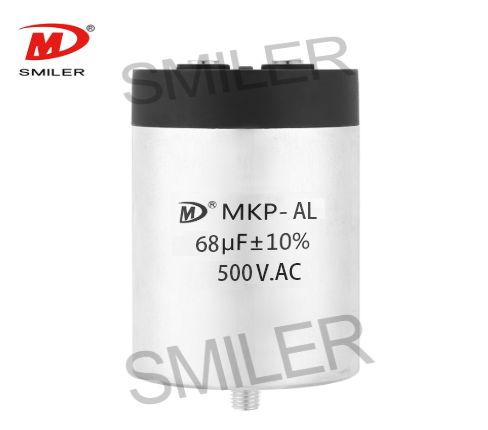
Exploring How AC Capacitors and DC Capacitors Function Differently
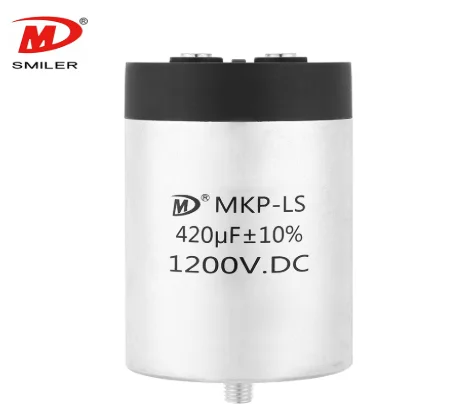
Mastering AC to DC Rectifier with Capacitor Techniques
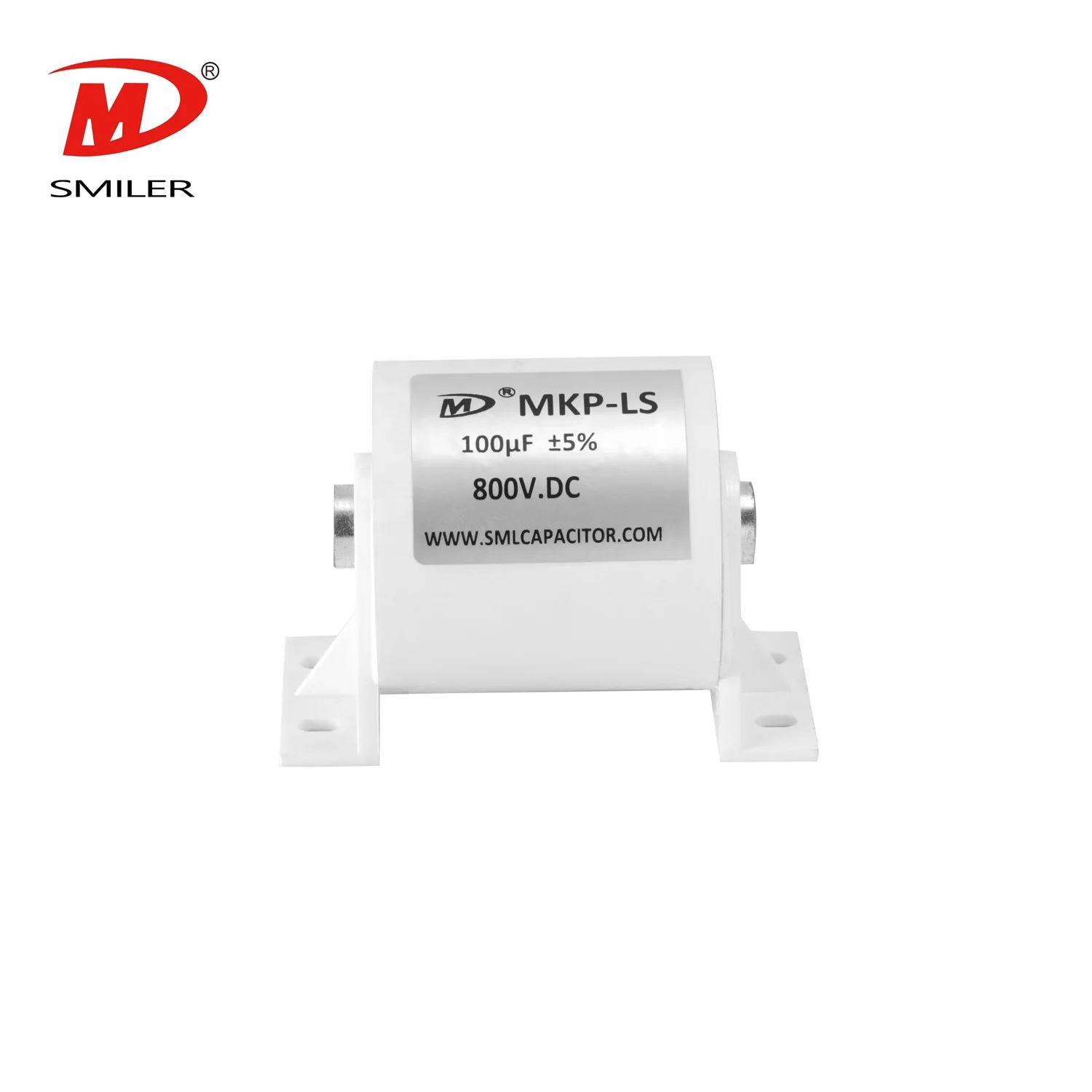
What Drives AC Capacitor Cost? A Comparison with DC Capacitors
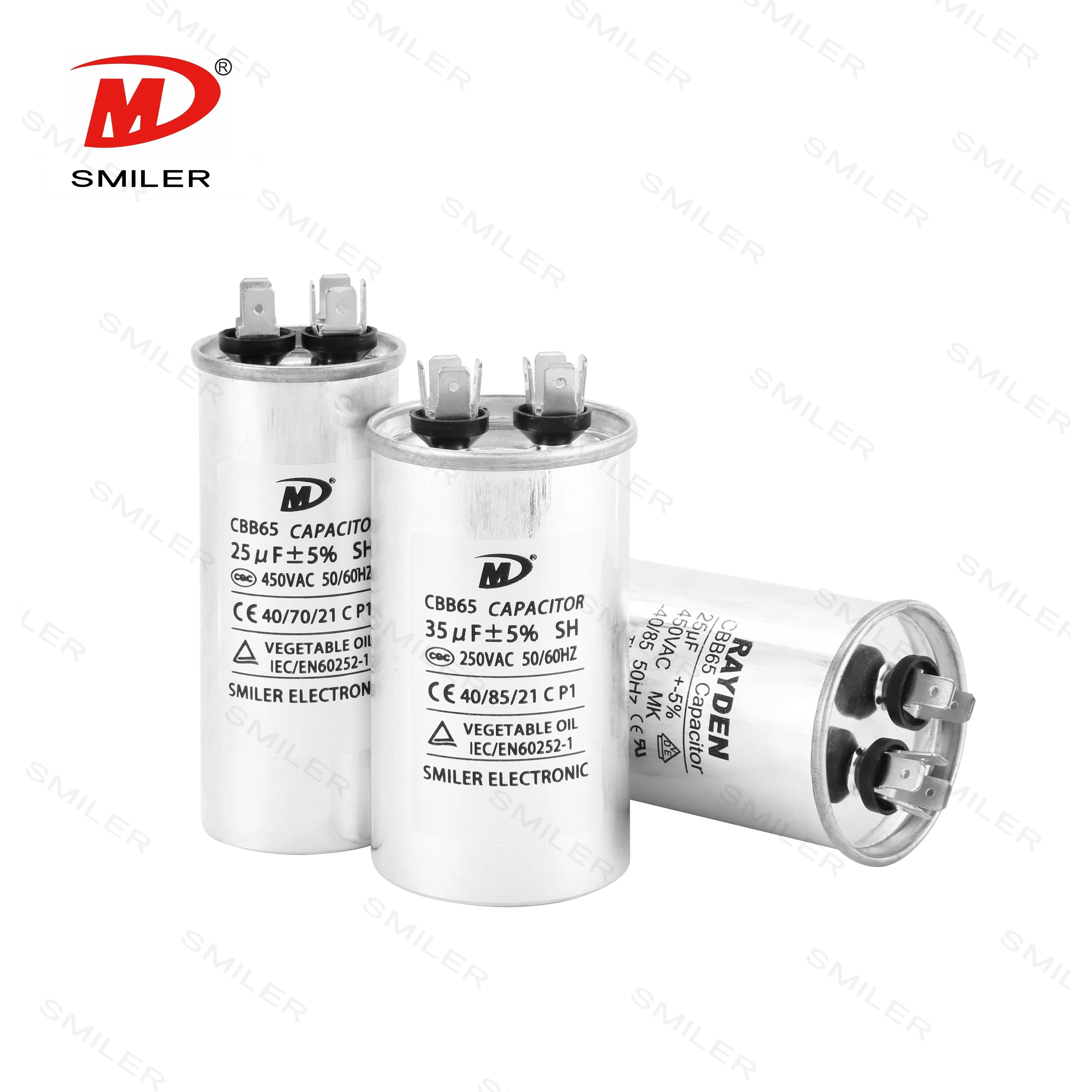
CBB65 250VAC Capacitor Explained: What Every Professional Should Know
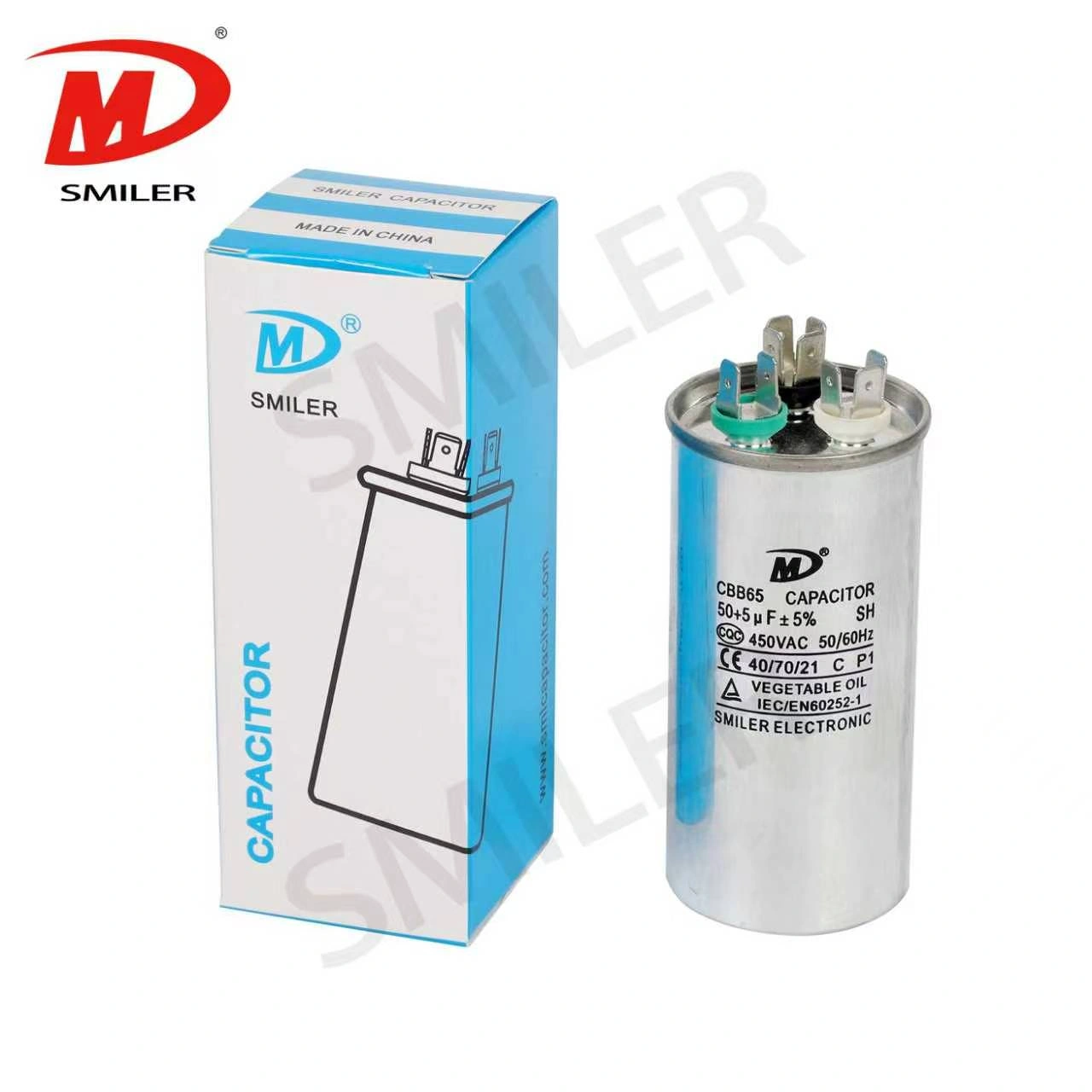
Top Rated AC Capacitors 2026: The Ultimate Industry Sourcing Guide


 Add
Building 12,Huazhi Technology Innovation Center,28 Sanle East Road,Beijiao,Foshan,Guangdong,China
Add
Building 12,Huazhi Technology Innovation Center,28 Sanle East Road,Beijiao,Foshan,Guangdong,China
 Phone
+86 18007576965 / 0757-22391591
Phone
+86 18007576965 / 0757-22391591
 Email
ari@sml-cap.cn
Email
ari@sml-cap.cn



