The bus drawing often arrives before the waveform. It may show a nominal DC voltage and a capacitance target, but neither tells you the ripple current in the part. Before approving a DC-Link capacitor, establish the bus-voltage range, current spectrum, and installed temperature. A solar inverter, wind converter, EV charger, and motor drive can all need this component under different conditions. A shared product family is a place to begin the search, not approval for another circuit.
At the DC link between input and switching stages, the capacitor takes in and returns ripple current. That exchange helps smooth the bus; source, load, and control behavior also affect its voltage. To assess a DC-Link capacitor, calculate or measure the waveform at its circuit position. The inverter output rating alone does not establish the capacitor's duty.
On the drawing, follow the connections first. The DC-Link capacitor spans the bus, smoothing voltage and buffering energy. An IGBT snubber sits by the switch to deal with transients; the AC output filter shapes the waveform. Those three locations make different demands on a part. Compare terminal styles and ratings for the position where it will actually sit.
Application | DC-bus job | SMILER capacitor series | First design question |
Distributed solar inverter | Filtering and smoothing before DC-to-AC conversion | MKP-LM | Does the board layout suit the pin connection and selected electrical variant? |
Centralized solar inverter | Filtering and smoothing at the inverter DC link | MKP-LL | Do the bus voltage and ripple conditions fit the exact part? |
Wind power converter | Filtering and smoothing at the converter DC link | MKP-LL | What ripple and cooling conditions apply at the capacitor location? |
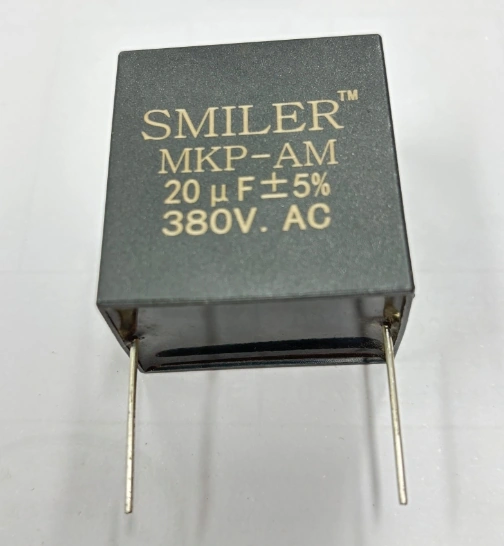
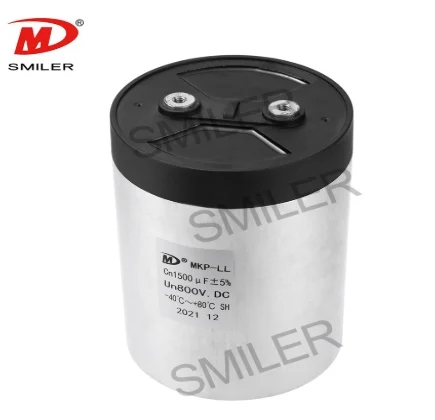
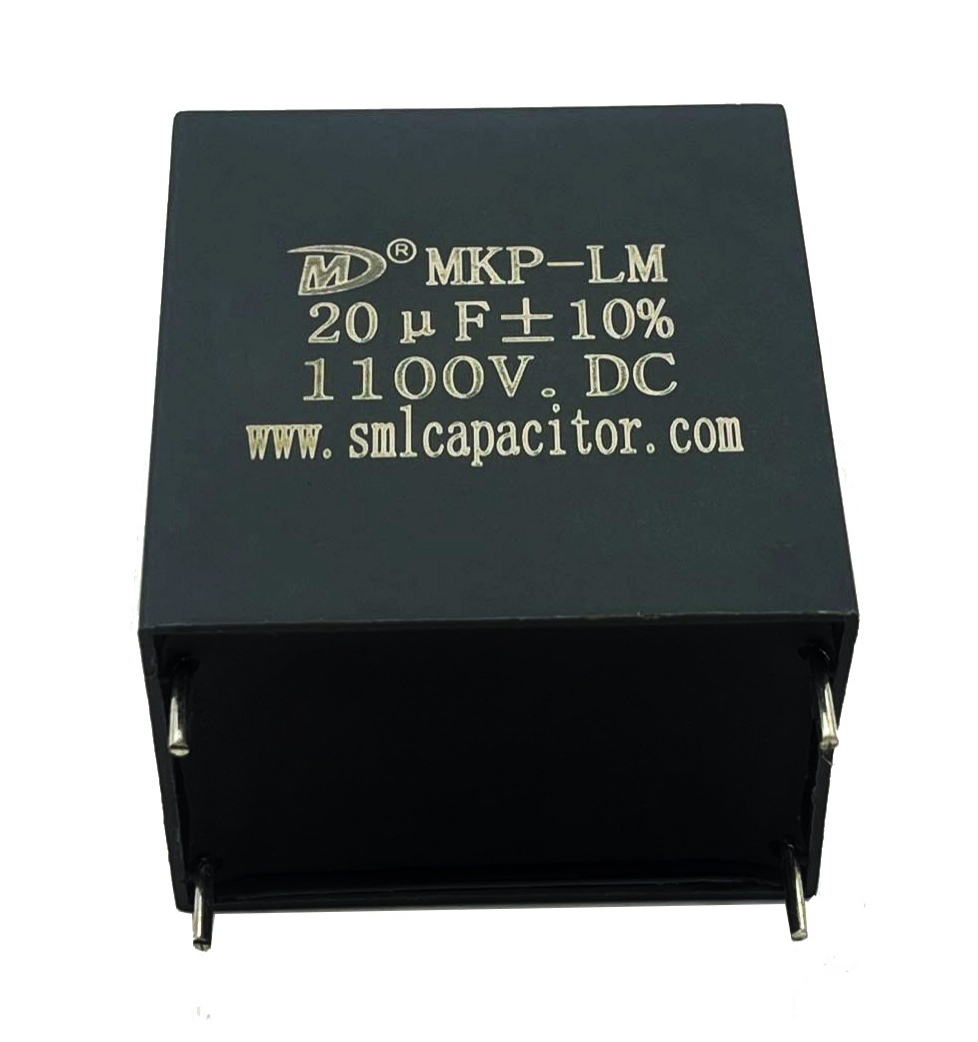
For distributed solar, the listed DC-Link capacitor family is MKP-LM. SMILER capacitor supplies this plastic-case series with pin-lead options, so the board connection matters alongside electrical rating. Centralized solar points to MKP-LL, an aluminum-case DC-Link family with a broader capacitance range. Neither application label qualifies every variant in the family.
“Distributed” and “centralized” provide no voltage or current rating. For either PV inverter, work from bus voltage and energy buffering to the ripple spectrum at the DC-Link capacitor. Check the table and terminal drawing against available room and cooling. A borrowed capacitance value leaves those checks open.
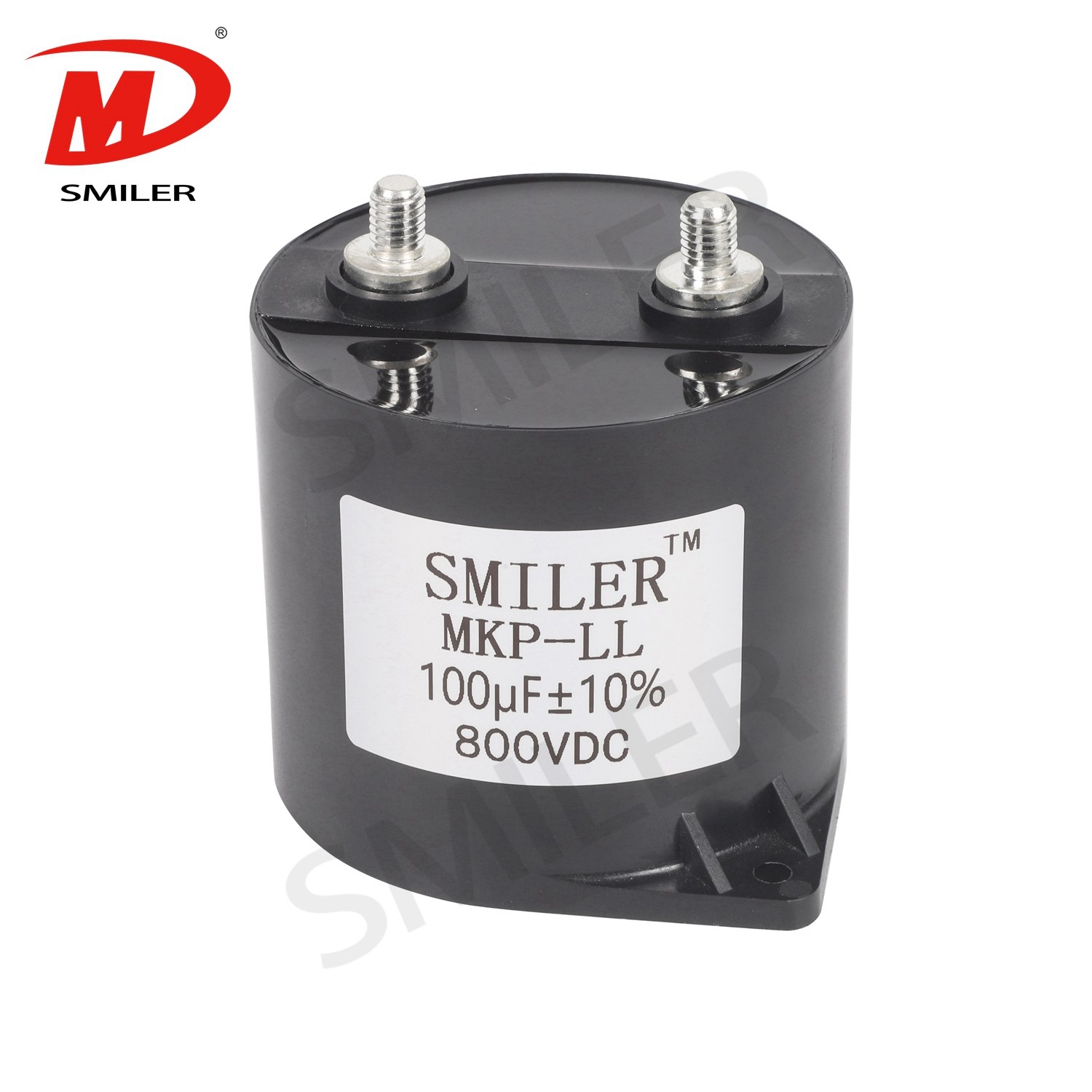
Wind converter drawings put the MKP-LL DC-Link capacitor at the DC bus for filtering and smoothing. The MKP-LL series has low ESR and low stray inductance, relevant to ripple heat and switching. Our product data cannot supply the converter's waveform. Obtain its bus-voltage range and ripple-current conditions; assess temperature at the installed part and its cooling path.
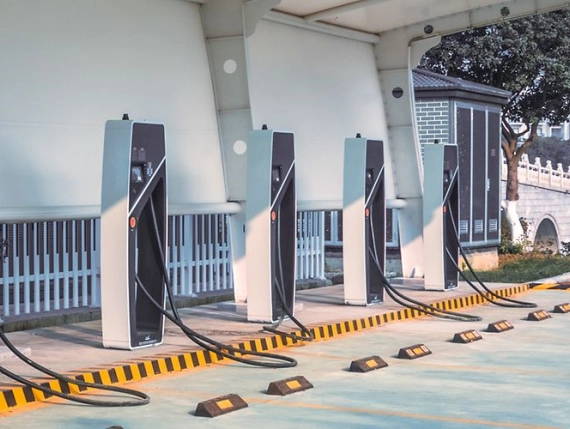
In a fast charger, two capacitors may appear on the same purchasing list. They should not be specified from one shared capacitance target. The MKP-LL DC-Link capacitor is across the bus, filtering ripple and buffering energy. MKPH-S belongs at the IGBT as a snubber and handles switching transients. Their locations make different electrical and connection demands.
For the charger, write down the upper DC-bus voltage first. Next estimate the ripple current through the DC-Link capacitor and the temperature where it mounts. Fit the terminal drawing to the proposed connection. A family that appears in another solar or drive design has not yet passed these charger checks.
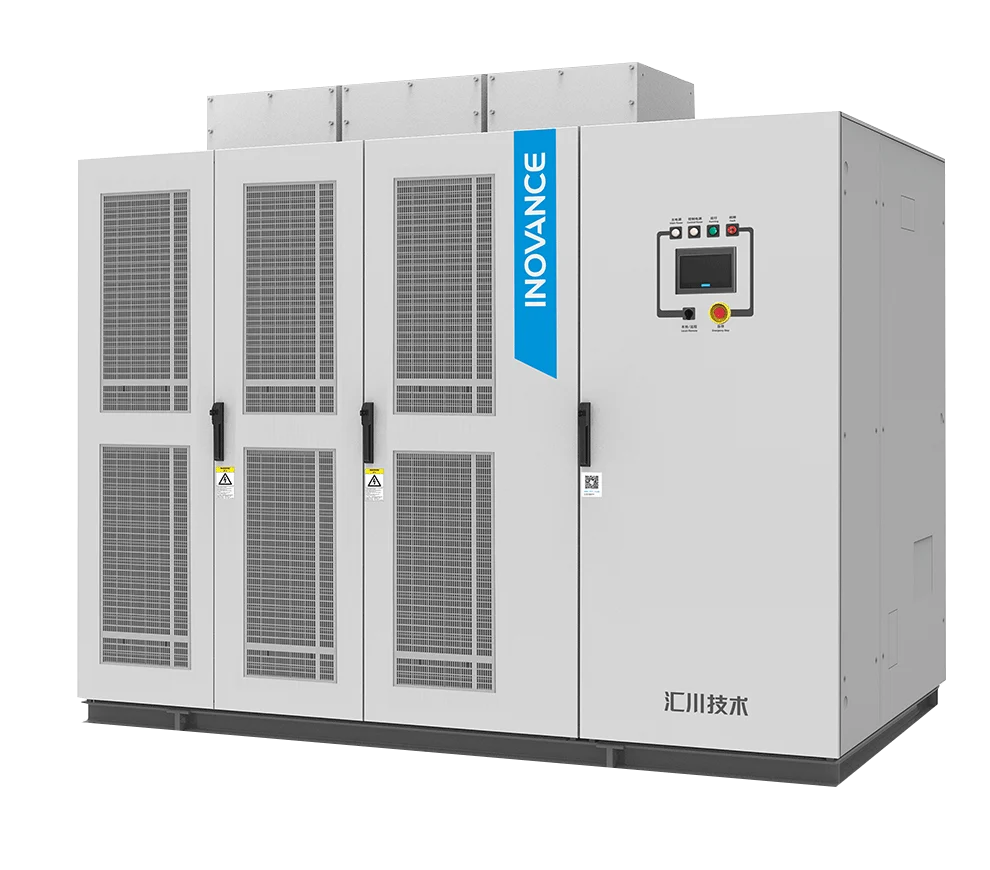
The link in a medium- or high-voltage variable-frequency drive feeds its inverter stage. MKP-LL can serve as the DC-Link capacitor at this point; IGBT snubbing is a different part position. A drive cabinet also sets the cooling and terminal constraints. Review those alongside bus voltage and ripple current.
MKP-LL may appear in a wind converter or charger as well. That cross-application use says which family to inspect, not which variant fits a drive. Put the drive's ripple spectrum and cooling conditions beside the specific part's ratings. Then compare dimensions with the cabinet. A capacitance match alone can conceal a heat or mounting problem.
Check maximum continuous DC-bus voltage against rated DC voltage at operating temperature, and the transient profile against permitted overvoltage. Set capacitance from bus ripple or energy buffering. The MKP-LM and MKP-LL tables can then identify variants with the needed voltage and capacitance; a series name alone cannot.
Some voltage-qualified candidates still run too hot. At the installed temperature, compare the DC-Link capacitor's RMS ripple-current rating with the current calculated from its expected frequency mix. Loss through ESR (equivalent series resistance) becomes heat. ESL (equivalent series inductance) matters to high-frequency overshoot as well, although the connection loop also has an effect. These checks can rule out an otherwise suitable capacitance.
The final review is physical too. Hot-spot limit, cooling, terminals, and mounting dimensions belong to the proposed location. Even a low-loss part needs heat removal and a suitable connection. Ratings from unlike operating conditions cannot settle the check.
For an MKP-LM or MKP-LL review, send SMILER capacitor the DC-bus voltage range, ripple-current spectrum, ambient and hot-spot temperatures, and size limit. The candidate's electrical data and terminal drawing must fit the design before approval.
A: Think of it as an energy buffer at the DC bus. It accepts and returns ripple current in operation, helping smooth voltage between stages. The source, load, and switching behavior set the waveform it sees. Capacitance is only one check; voltage and current ratings, installed temperature, and connection must suit that waveform and circuit.
A: No. Look at where each is connected. The DC-Link capacitor works across the bus, while the snubber is placed close to the switching device to address transients. Both can appear in one converter drawing, but their connection and stress call for separate part checks.
A: In distributed PV inverters, SMILER capacitor's pin-lead MKP-LM is the first family to inspect. Centralized designs point to MKP-LL. Neither label supplies a part rating. The actual inverter's DC-bus voltage and capacitance requirement set the electrical starting point; ripple current, cooling, and connection layout determine whether a variant is suitable.
A: Start with maximum bus voltage, required capacitance, and RMS ripple current at the charger's DC-Link capacitor. Check a specific part variant against the installed temperature and available terminal space. Review the IGBT snubber separately because its switching duty differs.
A: The family name can be shared, but the approved part may not be. MKP-LL appears in both applications. A wind converter and an industrial drive can differ in DC-bus voltage, ripple spectrum, cooling, and available space, so compare the proposed variant's ratings and drawing with each circuit before using it in either one.
 Add
Building 12,Huazhi Technology Innovation Center,28 Sanle East Road,Beijiao,Foshan,Guangdong,China
 Phone
+86 18007576965 / 0757-22391591
 Email
ari@sml-cap.cn