

When a fan for cooling slows down all at once, or makes a steady, deep buzzing sound, the motor is seldom the real issue. Often, the actual problem is a compact, box-like part inside the motor cover called the CBB61 capacitor. If you are a homeowner fixing a device over the weekend, or a business buyer finding solid parts for HVAC production, you need to know the basic specs and uses of the ceiling fan capacitor. This knowledge helps keep your equipment running well.
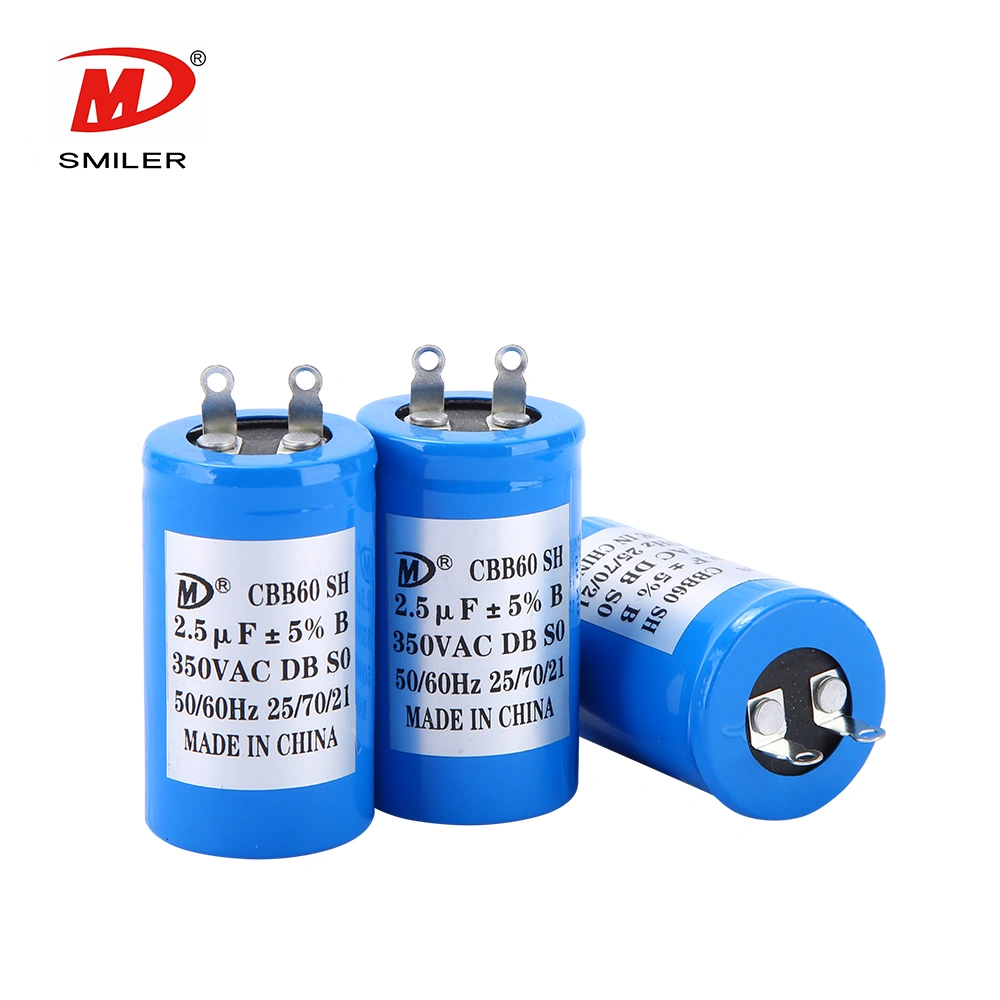
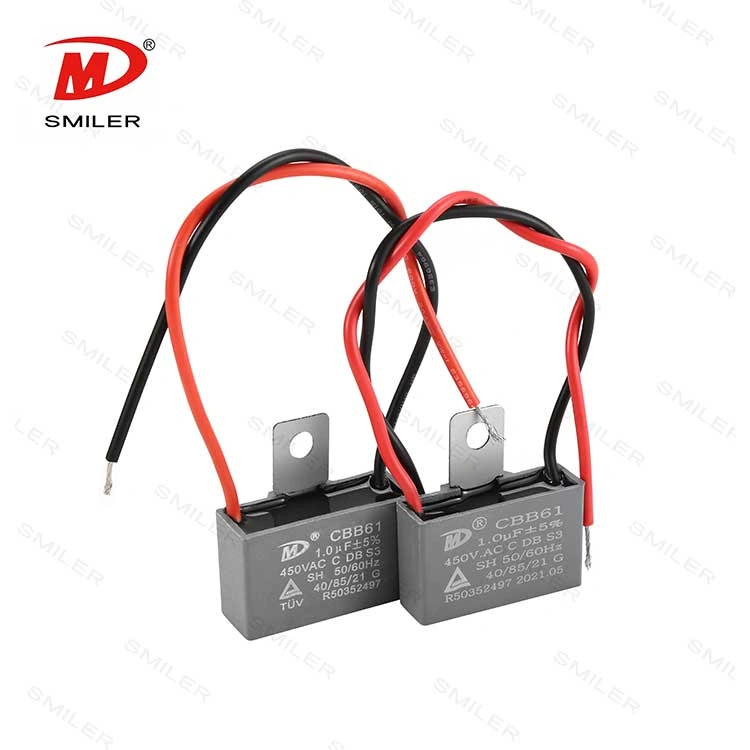
To check if a part fits right, start by reading the label on it. Capacitance, shown in microfarads (μF), tells how much electric charge the part can hold and let go. Most home cooling units use values from 1.5μF to 5μF. The voltage rating (VAC) shows the top level of alternating current voltage the part can take. Pick a μF value that matches exactly. Also, choose a VAC level with some extra room, like 250VAC or 450VAC. This basic step keeps AC motors safe and working.
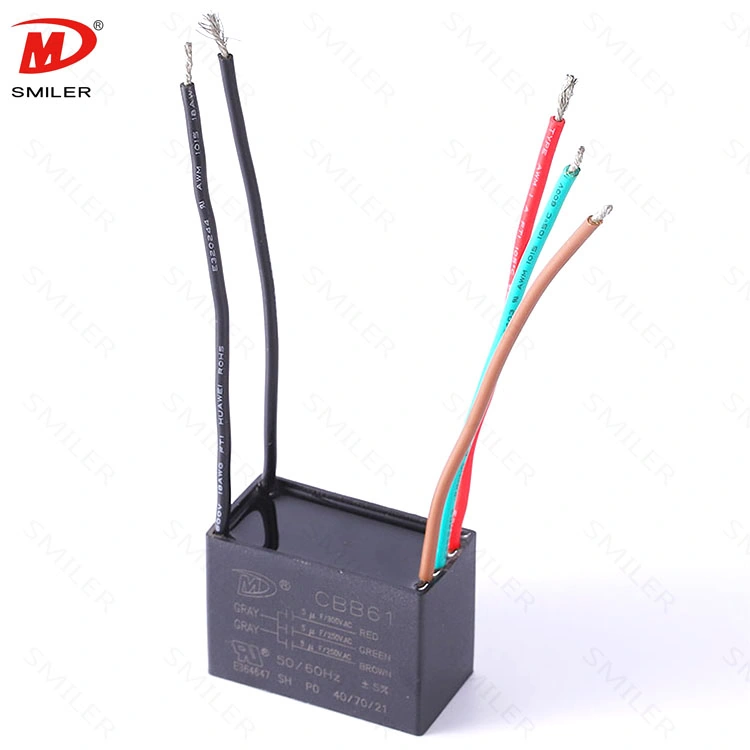
Tolerance, usually marked at ±5%, dictates the permissible variance from the nominal capacitance value. A tighter tolerance ensures precise current delivery. Furthermore, a high-quality ceiling fan capacitor is engineered to endure extreme thermal environments. Premium components maintain absolute electrical stability within a broad temperature range of -40°C to +85°C, which is essential for appliances subjected to continuous operation during peak summer heat.
One big advance in current film capacitors is their strong self-healing ability. If a power surge makes a tiny hole in the inner layer, the part seals off the spot on its own. This stops a major short circuit. Plus, with a small dissipation factor, the CBB61 Capacitor cuts heat loss. As a result, it boosts the energy savings in the motor setup.
The "CBB" name means the part uses metallized polypropylene film as its main insulating material. This beats old electrolytic types in holding power and low loss at high speeds. For jobs with long, hard runs, this film build gives the capacitor a longer life and good resistance to chemicals.
Motors on single-phase alternating current have one clear weakness. They cannot make a turning magnetic field alone. The CBB61 capacitor helps here as a phase shifter. It creates a fake second phase. This gives the start push to overcome the blades' stillness. Without this quick electric boost, the main part would stop. Then, the copper wires inside would heat up fast.
In newer fans with several speeds, capacitors also control the pace. The switch sends current through different capacitor sizes. This sets how much power reaches the motor. A larger capacitance lets in full current for fast turns. A smaller one limits it to a soft, slow air flow.
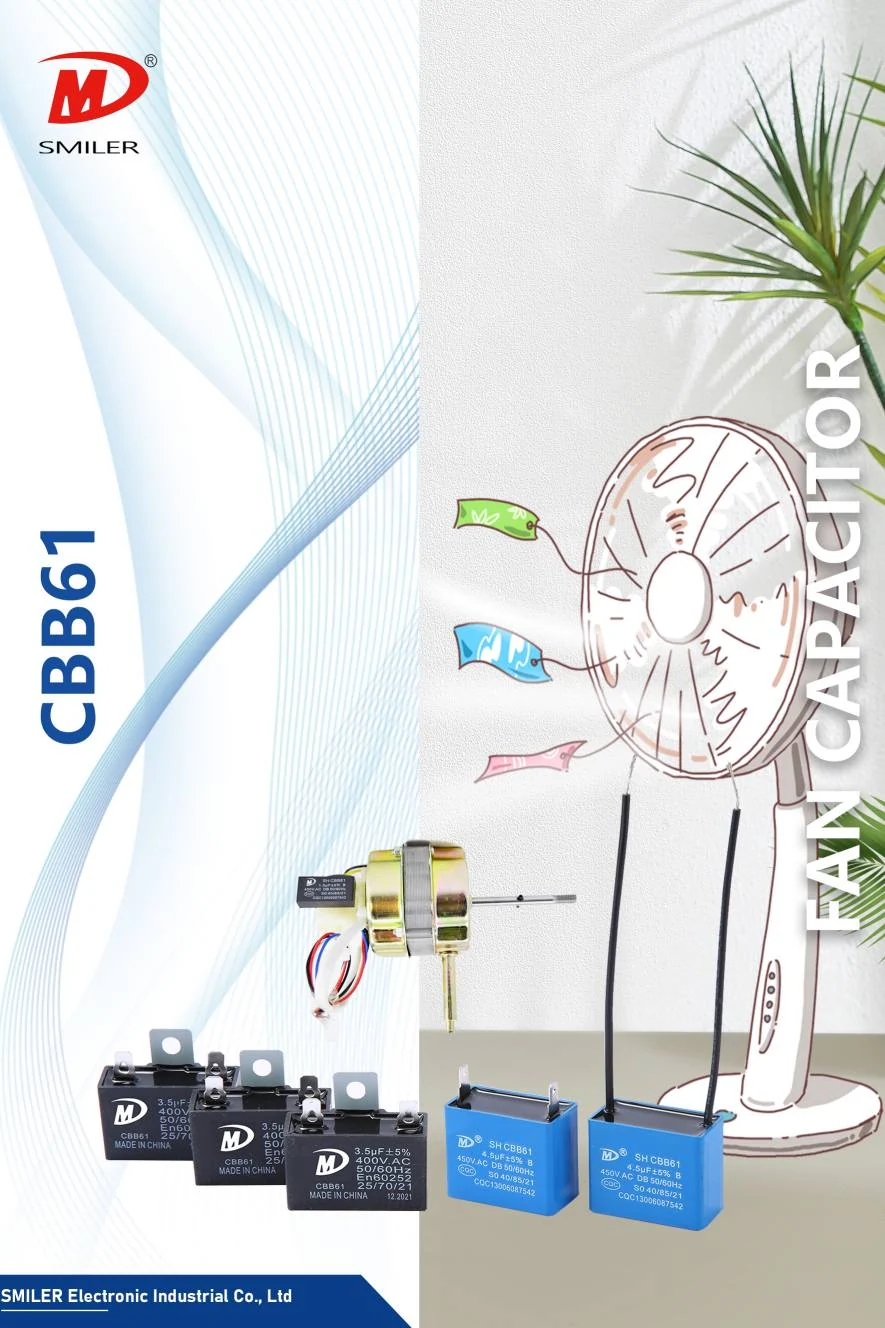
People know the CBB61 best as the standard ceiling fan capacitor. Yet, its power to add force at low power makes it useful in many places. Experts often add it to business exhaust fans, kitchen hoods, factory air movers, cooling systems, and auto water pumps. It keeps single-phase AC motors running steadily in all these.
The most immediate physical symptom of a degraded component is a drastic drop in rotational velocity. If an appliance is set to its highest setting but barely pushes any air, or if the motor housing hums loudly but requires a manual push to start spinning, the internal capacitance has likely plummeted below functional levels.
Look over the part before using the tools to test. A good CBB61 capacitor has even, flat sides. If you see any bends, like a puffed case, soft resin, or burn spots by the wires, the inside is damaged. Throw it out then.
The most definitive diagnostic method involves a digital multimeter equipped with a capacitance measuring mode. By applying the probes to a safely discharged unit, you can read the exact microfarad output. If the screen displays a number significantly lower than the printed μF rating or registers an open circuit, the component is completely dead.
Always stick to the microfarad numbers when swapping parts. A higher μF will push too much current to the motor. This can ruin the wires over time. A lower one gives too little push. For voltage (VAC), you can match or go higher than the first spec safely.
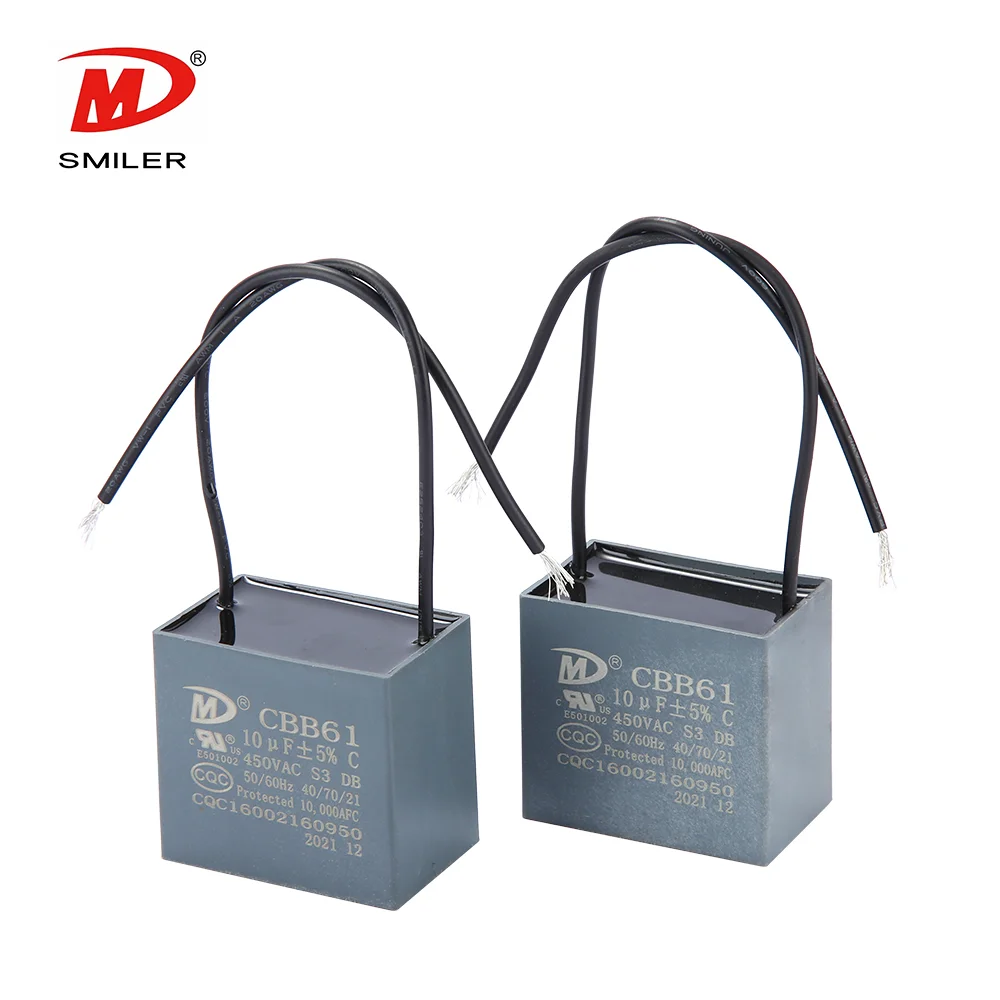
Various setups need different connection styles. Lead wire kinds have bendy covered cables. They suit tight spaces in home devices. Insert terminal types use firm metal pins. These fit quick clip needs in factory lines.
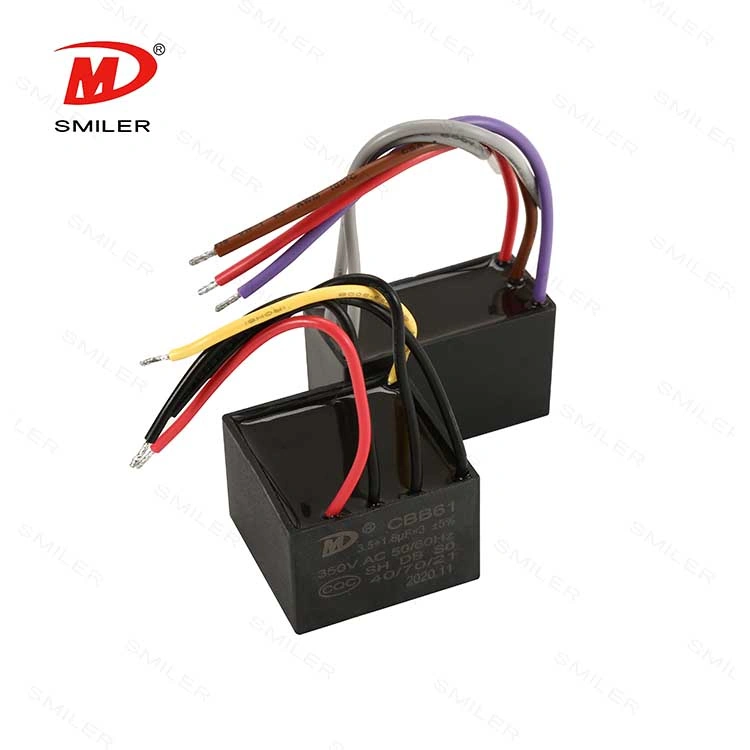
Simple fans use a two-wire, single-value capacitor. But fans with many speeds need dual-value or multi-value types. These have separate capacitor sections in one case. They give out three or more colored wires. The new part must have the same wire number and capacitance setup to work correctly.
Always disconnect power at the main circuit breaker before opening any appliance housing. Because a ceiling fan capacitor stores electrical energy long after power is cut, you must discharge it. Use an insulated screwdriver to bridge the metal terminals, releasing any lethal residual charge before handling the component with your bare hands.
Photograph the original wiring layout before severing any connections. For wire-lead models, strip the insulation on the new component and splice the corresponding wires securely using wire nuts and electrical tape. Adhering strictly to the original color-coded circuitry ensures the motor spins in the correct direction at the appropriate speeds.
In business production, steady parts affect the final product's trust and the company's name. Work with makers who check quality strictly. A top plant has special test areas. For instance, SMILER capacitor uses a 7-person quality team. They keep a product pass rate over 99.93%. This cuts risks in the supply line almost to zero.
Strong electronic parts need ongoing research and growth. Suppliers with long-term experience in the field can meet hard design needs easily. With 15 years in film capacitors, a 9-person R&D group, and 20 patents, SMILER capacitor brings new, auto-made production ways. This skill level makes them a sure choice for big firms like Home Depot and Midea.
In a quick market, fast supply helps start products sooner. Makers with low Minimum Order Quantities (MOQ) and change options, like special plastic or metal covers, give a big edge. SMILER capacitor answers in 24 hours. They offer the first plans that day. They set online talks for the next day. This helps buying teams hit tight deadlines.
A: Quick failures often come from big changes in local power, motor heat from dry parts, or use in an air warmer than the part's limit.
A: No. Stick to the factory microfarad numbers. A bigger one floods the system with current. This leads to odd heat and burns the motor's inner wires.
A: A two-wire part gives one set of capacitance. A three-wire part has two sets in one case. This lets the switch set different speeds.
A: These AC motor run capacitors have no polarity. You can connect any wire or end to the matching power line without worry.
A: In a space with good air flow and steady power, a top capacitor with metallized polypropylene film holds its charge well. It runs smoothly for 5 to 10 years.
What Does a CBB61 Fan Capacitor Do? Exploring the Role of CBB61 Fan Capacitors
How Fan Capacitors Work: A Detailed Technical Analysis
Can a Ceiling Fan Capacitor 4uf Be Replaced with a 5uf Capacitor Safely?
Best Ceiling Fan Capacitors 2026: Top Buyer's Guide
How to Test a Ceiling Fan Capacitor with a Multimeter (2026 Guide)


 Add
Building 12,Huazhi Technology Innovation Center,28 Sanle East Road,Beijiao,Foshan,Guangdong,China
Add
Building 12,Huazhi Technology Innovation Center,28 Sanle East Road,Beijiao,Foshan,Guangdong,China
 Phone
+86 18007576965 / 0757-22391591
Phone
+86 18007576965 / 0757-22391591
 Email
ari@sml-cap.cn
Email
ari@sml-cap.cn



